



















In recent years, 750W electric bikes have become increasingly popular across the United States. As fat tire eBikes, commuter eBikes, and long-range electric bikes continue to gain popularity, more riders are asking the same question: Are 750W eBikes legal in the U.S.?
The short answer is yes. In most states, a 750W electric bike generally falls within the legal limits for an eBike. However, whether a bike is truly street legal depends on several factors, including its eBike class, top speed, throttle configuration, and the specific regulations in your state.
In this guide, we'll explain how 750W eBikes are classified under U.S. laws, highlight key differences in regulations from state to state, and cover the most important legal considerations to know before buying one.

How Does 750W Motor Power Relate to eBike Classes?
Many first-time eBike buyers assume that:
750W = a high-speed, illegal eBike.
In reality, 750W refers to the motor's power output, not the bike's legal classification or maximum speed. Motor power primarily affects acceleration, hill-climbing ability, and overall riding performance, but it does not automatically determine how fast an eBike can go.
Today, most U.S. states follow the Three-Class eBike System, which classifies electric bikes based on their speed capabilities and throttle features rather than motor wattage alone.
|
eBike Class |
Motor Power |
Top Assisted Speed |
Throttle |
|
Class 1 |
Up to 750W |
20 mph |
No |
|
Class 2 |
Up to 750W |
20 mph |
Yes |
|
Class 3 |
Up to 750W |
28 mph |
Typically No |
As shown above, a 750W motor is generally within the legal power limit for eBikes in most states. That's why many 750W eBikes can offer stronger performance while still qualifying as street-legal electric bikes.
However, legality isn't determined by motor power alone. State laws may differ when it comes to throttle use, bike lane access, trail access, and Class 3 eBike regulations. Before riding, it's important to consider not only the bike's wattage but also its eBike class, top assisted speed, and local regulations to ensure compliance.
Why Is 750W Becoming the Most Popular eBike Power Standard?
One of the main reasons 750W electric bikes are so common in the U.S. is that 750W is widely recognized as the legal motor power limit for eBikes in many states.
Under the Three-Class eBike System adopted by most states, an eBike with a motor rated at 750W or less can typically be classified as an electric bicycle rather than a motor vehicle. As a result, many manufacturers view 750W as the ideal balance between strong performance and legal compliance.
Compared with lower-powered eBikes, a 750W motor provides better hill-climbing capability, stronger acceleration, and improved carrying capacity. These advantages are especially noticeable for riders who frequently encounter steep hills, ride fat tire eBikes, or need a reliable long-range electric bike for longer trips.
At the same time, a 750W eBike generally avoids many of the regulatory concerns that can come with higher-powered models, making it a practical choice for everyday use.
For many American riders, 750W offers more than enough power for daily commuting, recreational riding, and weekend adventures, while maintaining a comfortable balance of performance, versatility, and street-legal usability.
Federal Law vs. State Law: Why Motor Power Isn't the Only Thing That Matters
When people search for "Is a 750W eBike legal?", many assume that as long as the motor is rated at 750 watts or less, the bike is automatically legal everywhere.
In reality, U.S. eBike regulations are more complex than that.
One reason 750W eBikes are so popular is that the Three-Class eBike System, adopted by most states, generally recognizes 750W as the maximum motor power for a legal electric bicycle. That's why many commuter eBikes, fat tire electric bikes, and cargo eBikes are equipped with 750W motors.
However, a legal motor rating does not automatically mean an eBike can be ridden anywhere under all circumstances.
At the federal level, an electric bike with a motor of 750W or less and a maximum speed of 20 mph under motor power is generally classified as a low-speed electric bicycle. This federal definition is primarily used for product classification and consumer safety standards—it helps determine whether a vehicle is legally considered an eBike rather than a motor vehicle.
But when it comes to where you can ride, whether a throttle is allowed, and what rules apply on roads, bike lanes, and trails, state and local laws usually have the final say.
For example, in California, most Class 1 eBikes and Class 2 eBikes are generally permitted on many bike lanes and bike paths, while access for some Class 3 eBikes may be more restricted. In New York, Class 3 eBikes are legal, but certain parks, greenways, and recreational paths may still limit their use.
This means that two riders on the same 750W electric bike could face different rules depending on where they live.
Ultimately, motor power is only one part of the equation. Whether an eBike is truly street legal depends on several factors, including its eBike class, top assisted speed, throttle configuration, and the specific regulations in your state or local area. Before riding, it's always a good idea to review the rules that apply where you plan to use your eBike.

Who Is a 750W eBike Best For?
For many adult riders, a 750W eBike offers more than enough power for everyday riding. It strikes a practical balance between performance, comfort, and legal compliance, making it one of the most popular motor sizes in the U.S. market.
Compared with lower-powered electric bikes, a 750W motor typically delivers stronger hill-climbing ability, smoother acceleration, and better load-carrying performance. This can be especially beneficial for riders who frequently encounter hills, rough roads, or mixed terrain during their daily rides.
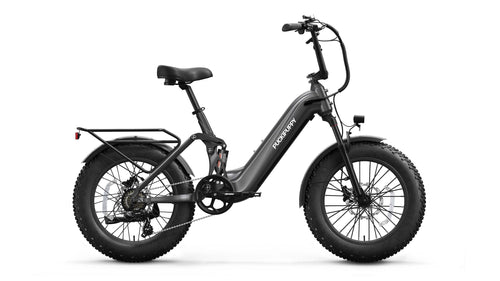
A great example is the Puckipuppy Beagle 2 ST, a 750W fat tire electric bike designed for both daily transportation and recreational riding. Equipped with a 750W rear hub motor and a 48V 20Ah battery, it provides a balanced combination of power, long-range capability, and everyday practicality.
Its 26" × 4.0" fat tires offer enhanced traction and stability on surfaces such as gravel roads, uneven pavement, and light off-road trails, helping riders feel more confident across a variety of riding conditions. The step-through frame also makes mounting and dismounting easier, making the bike a comfortable option for commuters, casual riders, and anyone looking for a more accessible riding experience.
Beagle 2 ST Ebike
For riders who want enough power to tackle real-world conditions without moving into higher-powered vehicle categories, a 750W eBike is often one of the most versatile and practical choices available.
Compared with higher-powered electric bikes, a 750W fat tire eBike typically remains within a more clearly defined street-legal category in most U.S. states.
What Should You Consider Before Buying a 750W eBike?
While a 750W electric bike is generally considered street legal in most U.S. states, there are still several important factors to review before making a purchase.
First, it's important to understand the eBike regulations in your state. Rules for Class 1. Class 2. and Class 3 eBikes can vary, particularly when it comes to throttle use, bike lane access, and helmet requirements.
You should also check the bike's top assisted speed. Most street-legal eBikes are limited to either 20 mph or 28 mph, depending on their classification. Modifying an eBike to exceed these limits may affect its legal status in some areas.
If you regularly ride on bike lanes, shared-use paths, or public trails, it's worth reviewing local access rules as well. Some jurisdictions allow throttle-equipped eBikes on bike paths, while others may restrict access for certain Class 3 models.
Another factor gaining attention among riders is battery safety. As long-range electric bikes and fat tire eBikes become more popular, many consumers are placing greater importance on reliable electrical systems and safety certifications. For that reason, many riders prefer eBikes equipped with UL-certified electrical systems, which are designed to meet recognized safety standards.
Ultimately, the best 750W eBike is one that offers more than just power. For long-term satisfaction, it's important to choose a model that balances performance, legal compliance, safety, and everyday usability.
Is a 750W Electric Bike the Right Choice for You?
For many riders in the United States, a 750W electric bike remains one of the most practical and well-rounded eBike options available today. It offers a strong balance of power, comfort, hill-climbing capability, and everyday usability, making it suitable for a wide range of riding situations, from daily commuting to weekend adventures and long-distance rides.
That said, motor power alone does not determine whether an eBike is legal to ride. Factors such as eBike class, speed limits, throttle configuration, and state or local regulations all play an important role in determining whether a bike qualifies as a street-legal electric bike.
Before purchasing a 750W eBike, it's always a good idea to review the eBike laws in your state and make sure the model you choose complies with local requirements.
🚴Explore Puckipuppy 750W Electric Bikes and discover the perfect balance of power, long-range performance, and street-legal riding. Find the right eBike for commuting, adventure, and everyday freedom.