














In recent years, EBikes have become increasingly popular across the United States. However, as their use has grown, the rules governing them haven’t kept pace in a consistent way. Instead of being regulated by a single system, eBikes are defined at the federal level and then further regulated by individual states and even local cities. Rules can vary a lot depending on where you ride. That’s why it’s important to take a little time to understand the local regulations before you get on the road.
Legal Notice: This guide is for general information only; e-bike classification, licensing, registration, and riding rules vary by state and locality and may change, so always verify current requirements with the relevant authority.
How eBikes Are Defined
According to the Consumer Product Safety Commission (CPSC), a vehicle is considered a “low-speed electric bicycle” if it meets all of the following criteria:
- It has fully operable pedals
- The motor is rated at no more than 750 watts
- It cannot go faster than 20 mph (about 32 km/h) when powered by the motor alone

Three Main Classes of eBikes
Most states in the U.S. use a widely accepted three-class system to regulate electric bikes: Class 1. Class 2. and Class 3. While this classification isn’t required under federal law, it has become the industry standard and is commonly built into state and local eBike regulations.
Class 1: Pedal-Assist Only eBikes
Class 1 is the most basic type and closest to a traditional bicycle.
Key features:
- The motor only provides assistance when you are pedaling (pedal-assist)
- No throttle
- Maximum assisted speed of 20 mph
In many states, Class 1 eBikes are treated much like regular bicycles. That means:
- They’re often allowed in bike lanes
- They face fewer restrictions
- They’re the most flexible for everyday use
Class 2: Throttle-Equipped eBikes
Key features:
- Includes a throttle
- Can power the bike without pedaling
- Maximum speed is still limited to 20 mph
Class 3: Speed Pedelec eBikes
If you want faster commutes and fewer stops, Class 3 eBikes give you the edge—but come with a few extra rules you’ll want to know.
Key features:
- Pedal-assist only (no throttle)
- Maximum assisted speed of 28 mph
- Usually equipped with a speedometer
Note: The motor stops assisting once you reach 28 mph, but you can still pedal and go faster on your own.
In many U.S. states, Class 3 eBikes come with stricter rules than Class 1 and Class 2. Common requirements may include: (additional regulations often apply, depending on the state or city)
|
Requirement Type |
Stricter Rules Explained |
Example States |
|
Minimum Age Requirement |
Some states set a higher minimum riding age specifically for Class 3 eBikes, commonly 16 years old. In some cases, the minimum age can be 14 or even 12. |
California, Connecticut, and Washington typically require riders to be at least 16; Virginia requires 14; Louisiana requires 12. |
|
Helmet Requirements |
Nearly all states require minors to wear helmets. Some states impose stricter helmet rules for Class 3 eBikes compared to Class 1 and Class 2—for example, requiring both the rider and passengers to wear helmets, with some rules applying regardless of age. |
Virginia requires both the operator and passengers on Class 3 eBikes to wear helmets; Tennessee requires helmets for all operators and passengers; Louisiana also requires all operators and passengers to wear helmets; Georgia enforces helmet requirements for both riders and passengers on Class 3 eBikes. |
|
Path Restrictions |
Compared to Class 1 and Class 2, Class 3 eBikes are more likely to face restrictions on bike paths, trails, and multi-use paths. Some states impose direct limits, while others allow local governments to set stricter rules. |
Washington places clear restrictions on Class 3 eBikes on bike paths and trails; Connecticut enforces stricter limits on trails and multi-use paths; California also restricts where Class 3 eBikes can be used and allows local authorities to regulate further. |
Overall, while Class 3 eBikes offer higher speeds, they are typically subject to more regulations and restrictions compared to Class 1 and Class 2 when it comes to legal use and compliance.
Core eBike Usage Rules
After understanding the classification system and overall regulatory structure, the next key question is: what rules actually apply to eBikes in everyday use?
Driver’s License
In most states, a properly classified eBike does not require a driver’s license.
However, there are some exceptions worth noting: in certain situations or under specific conditions, a driver’s license may be required.
|
Situation |
States |
Explanation |
|
States that require a driver’s license for eBikes at the state law level |
Alabama, Alaska, Massachusetts, Missouri, New Mexico, North Dakota |
These states have not yet established a clear, standalone legal framework for eBikes. As a result, eBikes may still fall under other motor vehicle categories, which can trigger a driver’s license requirement. |
|
States that have recently placed eBikes under stricter licensing systems |
New Jersey |
The New Jersey MVC currently states that riding an eBike requires a valid driver’s license, an eBike license, or an eBike permit. The state also requires registration and insurance, sets a minimum age of 15, and mandates helmet use for all riders. |
Registration & License Plate
|
Situation |
Registration Required? |
Example States |
|
Standard three-class eBikes that meet legal definitions |
Usually not required |
Most states that follow the three-class system operate this way |
|
eBikes that exceed standard limits and are classified as motorized bicycles or mopeds |
Sometimes required, along with possible license, insurance, and permits |
New Jersey — The MVC requires registration, and eBikes that fall outside standard low-speed definitions may be subject to stricter requirements |
|
States that explicitly require eBike registration |
Required |
Hawaii — State law summaries (such as those from NCSL) list Hawaii as requiring eBike registration |
|
States where local rules may impose additional restrictions |
Not necessarily registration, but additional local regulations may apply |
Illinois — Local governments can add their own rules, but state law does not require all eBikes to be registered |
|
Clear exemption for compliant eBikes |
Not required |
Wyoming — State law defines electric bicycles as not being motor vehicles, so they are exempt from registration, driver’s license, and insurance requirements |
Insurance
From a regulatory standpoint, most states that follow the three-class eBike system do not require eBike insurance. However, there are exceptions—for example, New Jersey, where eBike insurance is explicitly required.
At the same time, from a practical perspective, insurance is less about whether it’s legally required and more about having proper protection. For higher-value eBikes or for riders who use their bikes frequently for commuting or city riding, it’s worth checking whether your existing homeowners, renters, or liability insurance already provides coverage.
In many cases, insurance policies may place limits on eBike-related damage or liability claims. If that’s the case, you may want to consider purchasing a dedicated eBike insurance policy for more complete protection.
Where You Can Ride
There’s no single set of eBike laws in the U.S. Instead, the rules are determined by a combination of state laws and local city or municipal regulations.
|
Category |
State / Authority Examples |
|
Sidewalks |
More likely to be restricted. For example, Washington prohibits Class 3 electric-assist bicycles on sidewalks unless the sidewalk is part of a bike/pedestrian path, there’s no reasonable alternative route, or local rules allow it. |
|
Bike Lanes |
Generally allowed. |
|
Park Trails |
Highly dependent on park rules. For example, Washington State Parks allows Class 1 and Class 3 eBikes on non-motorized trails where traditional bicycles are allowed, but not on hiking-only trails. In contrast, California State Parks is more restrictive—while eBikes can use public roads, many park trails only allow Class 1 eBikes with special approval, and Class 2 and Class 3 are often not allowed. |
|
Natural / Recreational Trails |
Typically more restrictive than roads. For example, California prohibits Class 3 eBikes on equestrian, hiking, or recreational trails unless the trail is adjacent to a road or specifically allowed by local authorities. |
|
Shared-Use / Multi-Use Paths |
Often regulated by class. For example, Connecticut prohibits Class 3 eBikes on bike and multi-use paths; Georgia also restricts Class 3 access unless otherwise allowed. Washington generally allows Class 1 and Class 2 eBikes, but Class 3 access often requires local approval. |
|
National Parks |
Allowed, but not everywhere. Under National Park Service rules, eBikes can only be used where traditional bicycles are allowed, and park managers can impose additional restrictions. This typically includes roads, parking areas, and certain designated paths—not the entire park. |
|
Protected Areas (e.g., Wilderness Areas) |
Generally more restricted. Many designated wilderness areas prohibit all bicycles, including eBikes. For example, the National Park Service bans bicycles and eBikes in wilderness areas. The U.S. Forest Service allows Class 1, 2, and 3 eBikes on motorized roads and trails, but not on non-motorized trails. |
|
Wildlife Refuges |
Allowed in some cases. The U.S. Fish and Wildlife Service allows eBikes in areas where managers determine they are compatible with the refuge’s purpose and where traditional bicycles are already permitted. Access depends on local management rules and is not automatically allowed everywhere. |

How to Choose the Right eBike Within the Regulatory Framework
Once you understand electric bike laws in the U.S., one thing becomes clear: not all eBikes are suitable for every state or every riding scenario.
Different riding environments call for different priorities:
- City commuting: Focus on compliance, comfort, and ease of use
- Suburban riding: Prioritize range and stability
- All-terrain or outdoor use: Need stronger power and better adaptability
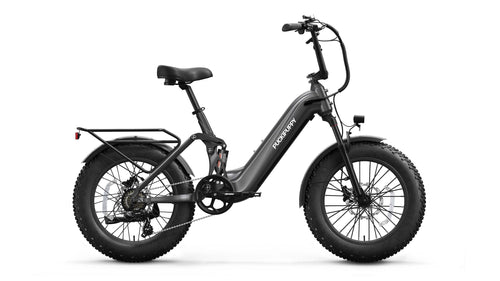
Among the many options, certain models are better suited for riders who want both performance and legal compliance. For example, on the PUCKIPUPPY website, the GoldenR Electric Bike is a great choice for multi-scenario riding:
- Dual motor design for stronger power
- Long battery range, ideal for extended rides
- Capable across multiple terrains (city streets, suburban roads, and light off-road conditions)
- Stable handling, suitable for riders of different experience levels
In a complex regulatory environment, choosing an eBike that balances performance, flexibility, and legal compliance is especially important. A model like the GoldenR is designed for exactly this kind of real-world use—helping you stay compliant while still enjoying a high-quality riding experience.
GoldenR
If you’re looking for more eBikes that fit within regulations, shop PUCKIPUPPY and find the one that fits your daily ride..
Ride Freely Within the Rules
Electric bikes are more than just a way to get around—they’re part of a system shaped by federal, state, and local regulations. Understanding electric bike laws isn’t about adding restrictions; it’s about making every ride smoother and more worry-free.
When you know which class your eBike falls into, understand where you’re allowed to ride, and choose a bike that fits your needs, getting around becomes less of a concern and more of a controlled, predictable experience.
Explore PUCKIPUPPY and find the eBike that fits you best—ride farther, and ride with confidence.