




















The Real Challenge of World Cup Travel
The 2026 World Cup isn’t just a global sporting event—it’s also a major stress test for urban transportation. With matches taking place across multiple high-profile cities, millions of fans will flood into stadiums, bars, and surrounding neighborhoods at the same time, creating unprecedented pressure on city mobility.
In cities like Los Angeles, roads leading to stadiums can face hours of congestion before and after matches. In New York, the dense urban layout combined with peak-hour traffic can make even short trips slow and unpredictable. Meanwhile, in Mexico City, the sheer population size and complex traffic conditions further amplify travel uncertainty.

The Key Challenges Fans Face When Getting Around
For fans, traditional transportation comes with several major pain points:
- Unpredictable timing: Traffic jams, long lines, and detours make it hard to stay on schedule
- Limited parking: Stadium areas often have scarce, expensive, and hard-to-find parking
- Heavy reliance on transit: Rideshares and public transportation can become unreliable during peak hours
- Fragmented experience: Getting there feels like a hassle instead of part of the overall experience
In this context, fans aren’t just looking for a way to get from point A to point B—they need a more flexible and controllable way to move around.
That’s where electric bikes stand out as a smart solution. They stay agile in traffic, handle short distances efficiently, and offer a more free and flexible way to navigate complex urban environments.
Stadium Travel
During the 2026 World Cup, getting to the stadium will be one of the most common—and most challenging—travel scenarios for fans. Whether coming from downtown or surrounding areas, everyone is trying to arrive before kickoff, often during peak traffic hours.
Take Los Angeles as an example. In the hours leading up to a match, roads around major stadiums quickly fill with heavy traffic. Tens of thousands of fans heading to the same destination at the same time can push even normally smooth roads into gridlock.
In this situation, fans typically face several key travel challenges:
|
Challenge |
What It Looks Like |
Impact on the Experience |
|
Heavy Traffic Congestion |
Major roads often back up for long periods before and after matches |
Longer travel times and increased stress |
|
Unpredictable Timing |
Travel time varies significantly depending on traffic conditions |
Hard to arrive on time, disrupting game plans |
|
Limited Parking |
Few parking spots near the stadium; finding one takes time and can be expensive |
Higher time and financial costs |
|
Slow Entry Process |
Parking, walking, and entering the venue add extra steps to the journey |
Extends total travel time and reduces overall efficiency |
All of these factors combined make simply getting to the stadium on time a challenge in itself.
In high-density traffic conditions like this, electric bikes offer a more flexible and efficient way to get around. Compared to traditional transportation, they can take alternative routes to bypass congestion and avoid high-traffic main roads, improving overall travel efficiency. They’re also less affected by external traffic conditions, making travel time more predictable.
Because there’s no need to rely on parking, riders can stop much closer to their destination, significantly reducing the time spent searching for a spot. In crowded or restricted areas around stadiums, eBikes also make it easier to handle the “last mile” of the journey. On top of that, they support direct, point-to-point travel—cutting out transfers, wait times, and unnecessary detours—resulting in a smoother, more seamless overall experience.
Watch Parties & Social Outings
The World Cup isn’t just something that happens inside stadiums—it also lives across a city’s social spaces. Bars, restaurants, house parties, and organized viewing events all come together to create a dense “network” of places where fans gather.
Rather than staying in one spot, fans often move between locations based on the game, their friends’ plans, or the overall vibe. This turns a simple round trip into a highly dynamic way of moving through the city.
In this kind of social travel, fans typically face a few key challenges:
|
Key Issue |
Description |
Impact on Experience |
|
High Switching Cost |
Moving between different watch locations takes time and effort, with limited smooth transitions |
Breaks the flow of the outing and adds friction to the experience |
|
Long Wait Times |
Ride-hailing and taxis are slow to respond during peak hours, with unpredictable delays |
Creates uncertainty and slows down plans |
|
Limited Parking |
Parking is scarce and expensive in busy areas |
Increases both time spent and overall cost |
|
Low Flexibility |
Travel plans are easily affected by traffic conditions, making route changes difficult |
Reduces the ability to adapt plans on the go |
|
Interrupted Experience |
Frequent waiting for transportation disrupts the flow of watching and socializing |
Breaks continuity and reduces overall enjoyment |
At the core of these challenges is one simple issue: mobility isn’t flexible enough, which ultimately limits how fully fans can participate.
In this context, electric bikes improve the experience by boosting both flexibility and responsiveness:
- Flexible mobility: Easily move between different viewing spots without being tied to fixed routes
- On-demand travel: No need to wait for rideshares or public transit—you can go whenever you’re ready
- Efficient short trips: Perfect for frequent, short-distance trips between nearby locations
- Reduced dependency: Less reliance on cars, parking, or public transportation
- Urban adaptability: Seamlessly navigate different neighborhoods and social environments
It gives you the freedom to stay engaged in the moment—join when you want, leave when you want.
City Mobility & Exploration
During the 2026 World Cup, travel isn’t just about getting to the game—the city itself becomes part of the experience. Outside of matches, fans often have pockets of free time to enjoy food, go shopping, visit landmarks, or simply explore different parts of the city. These activities are spread across multiple areas, making travel more frequent, short-distance, and multi-stop.
In cities like Toronto, with its open layout and clearly defined districts, it’s easy to move around and explore between matches. In contrast, cities like Mexico City, with their large scale and complex traffic patterns, make efficient short-distance travel especially important.
No matter the city, the ability to efficiently connect different destinations plays a key role in shaping the overall experience.
|
Issue |
What It Looks Like |
Impact on Experience |
|
Low Short-Trip Efficiency |
Long walking distances; taking a taxi isn’t always cost-effective |
Reduces motivation to explore and limits how often you go out |
|
Complex Traffic Conditions |
Congestion and limited route options |
Increases uncertainty and makes travel less predictable |
|
Fragmented Travel |
Gaps between activities without smooth transitions |
Creates a disjointed, less seamless experience |
|
Limited Travel Flexibility |
Reliance on fixed options like rideshare or public transit |
Restricts where and how far you can explore |
|
Poor Time Efficiency |
Time lost waiting, transferring, or dealing with delays |
Leaves less time to actually enjoy the city |
These issues all come down to one core problem: current transportation options don’t effectively support flexible, continuous, and frequent urban mobility.

eBike Advantages for City Travel
Electric bikes help address this by improving both efficiency and flexibility in how people move around the city:
- Efficient short-distance travel: Quickly cover 1–10 km trips, improving overall travel efficiency
- Seamless connectivity: Easily move between restaurants, attractions, and viewing spots without disruption
- Better time utilization: Spend less time waiting or transferring, and more time actually enjoying the experience
- Greater mobility freedom: Go and stop whenever you want, without being tied to fixed transit schedules
- Urban flexibility: Stay agile even in dense traffic or complex road environments
Whether it’s quick trips or city exploration, eBikes offer a more freely flowing and efficient way to move through the city.
A More Reliable Commuting Option: Built for the Demands of the World Cup
In a dense, unpredictable environment like the World Cup, your way of getting around needs to be more than just functional—it has to stay consistent across changing road conditions. With frequent stops and starts, mixed terrain, and constant shifts between different travel scenarios, having an eBike that balances power, comfort, and stability becomes especially important.
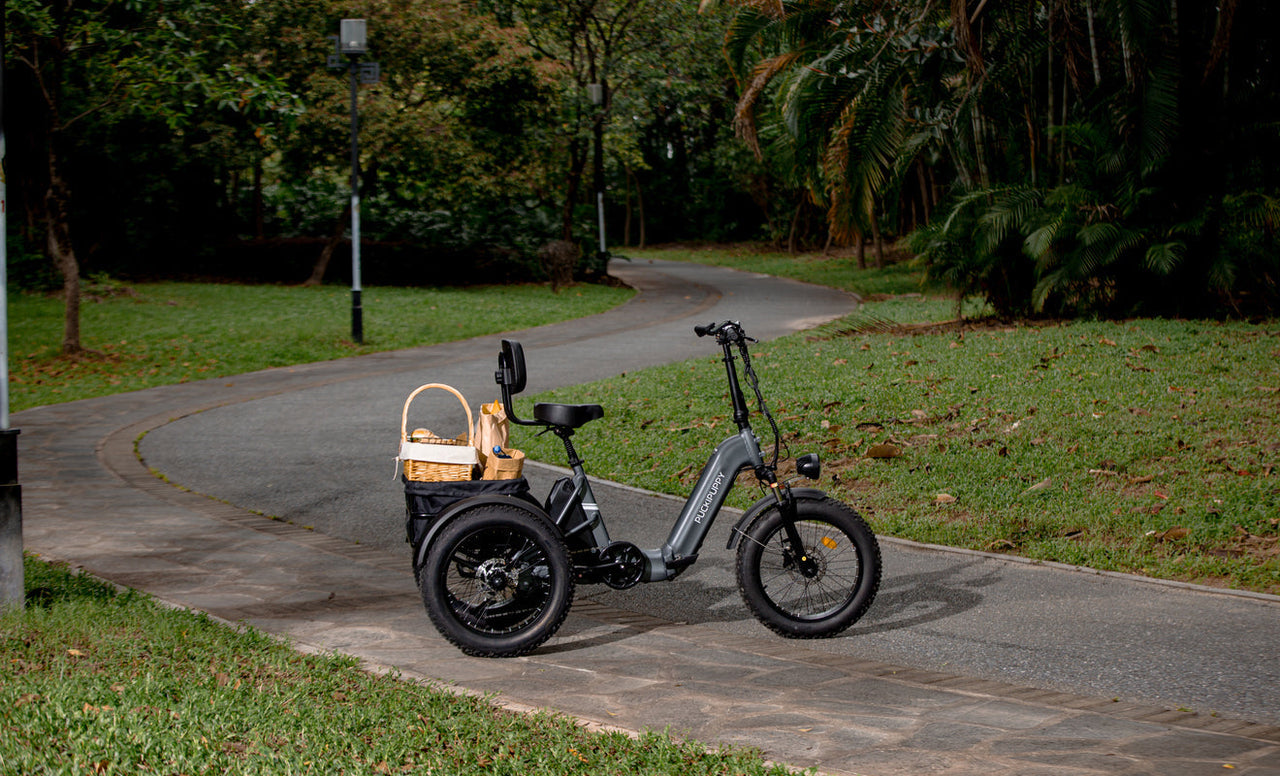
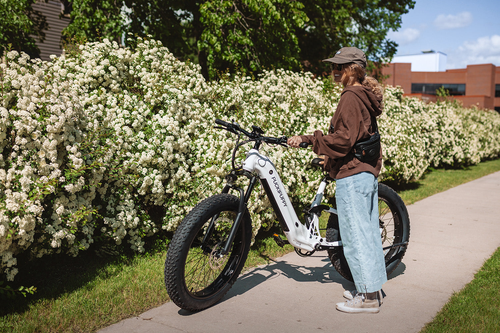
The PUCKIPUPPY Corgi Ebike is a strong example of a model designed for this kind of demanding use. With a full suspension system and fat tires, it delivers a smoother ride when moving between city streets and more complex road conditions, helping reduce fatigue from bumps and vibrations.
In real-world use, the Corgi isn’t just about getting from point A to point B—it creates a more relaxed and fluid riding experience. It works well for everyday city travel, while also handling frequent trips to and from matches with ease. Even at higher speeds, it remains stable and easy to control, giving you confidence when navigating busy streets.
From a performance standpoint, it features a roughly 750W motor (with higher peak output) and up to around 80 miles of range, making it capable of supporting a full day of travel—whether that includes multiple matches or moving across different parts of the city. This helps reduce the need for frequent charging and lowers range anxiety.
Whether you’re riding from your hotel to the stadium or moving between viewing locations, the PUCKIPUPPY Corgi delivers consistent, reliable support—making your World Cup travel more efficient, more flexible, and more enjoyable.
Corgi Ebike
Finding a More Complete Solution
When the World Cup turns an entire city into a constantly moving map, what truly shapes the experience isn’t just where you go—but how you get there. From crowded stadium areas to viewing spots spread across the city, and even quick transitions between gatherings with friends, getting around is no longer just about transportation. It becomes a rhythm, a choice, and part of the experience itself.
In this context, electric bikes offer a lighter, more flexible answer: they aren’t limited by traffic or fixed routes, allowing every trip to feel more open and every ride to be more efficient. They give you the freedom to move between matches and across the city with ease—so you can spend more time on what really matters: the game, your friends, and the moments that define the World Cup.
If you’re looking for a more complete and reliable way to get around during the World Cup, explore our collection of commuter eBikes. It brings together a range of models designed for city travel and event commuting. Whether you’re heading to the stadium, moving between viewing spots, or riding through the city day-to-day, you’ll find options that fit different needs and riding styles.
From long-range efficiency to all-day comfort, from lightweight maneuverability to all-terrain capability, our selection helps you stay steady and confident in complex urban environments. Discover our commuter eBike and make every ride more efficient, more flexible, and perfectly aligned with the pace of the World Cup.