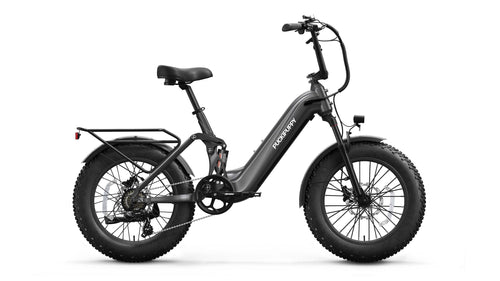

















Choosing between the Puckipuppy Poodle and Lectric XPress2 Cruiser comes down to what matters most on a daily commute. The Poodle offers more range and carrying capacity at a lower price, while the XPress2 puts more emphasis on stronger peak power and a more responsive pedal-assist feel.
For most buyers, the real question is not which bike has the better spec sheet, but which one better fits the distance, hills, traffic, cargo, and riding feel they deal with every day.
Puckipuppy Poodle vs Lectric XPress2 at a Glance
The Poodle and XPress2 Cruiser are close enough in size, speed, and commuter-focused equipment to compete for the same type of rider, but their specifications point to different priorities.
|
Specification |
Puckipuppy Poodle |
Lectric XPress2 Cruiser |
|
Current Price |
$1,099.99 |
$1,399 |
|
Frame |
Step-through |
Step-thru cruiser |
|
Rider Height |
5'3"–6'4" |
5'2"–6'3" |
|
Standover Height |
19.4" |
18.5" |
|
Bike Weight |
63.1 lb |
60 lb without battery |
|
Motor |
750W, 960W peak |
750W, 1,310W peak |
|
Pedal-Assist Sensor |
Cadence |
Selectable torque or cadence |
|
Battery |
48V 15Ah, 720Wh |
48V 14Ah, 672Wh |
|
Published Range |
45–75 miles |
Up to 60 miles |
|
Tires |
27.5 × 2.4" |
27.5 × 2.1" |
|
Front Suspension |
80 mm adjustable fork |
80 mm adjustable SR Suntour fork |
|
Brakes |
Hydraulic disc, 180 mm rotors |
Hydraulic disc, 180 mm rotors |
|
Payload Capacity |
350 lb |
330 lb |
The main difference is where each bike puts its value. At current listed prices, the Poodle costs $299.01 less while pairing a slightly larger battery with a higher published range and payload capacity. The XPress2 counters with substantially higher peak motor output and the ability to switch between torque- and cadence-based pedal assist, giving riders more control over how the motor responds to their pedaling.
Those differences look meaningful on paper, but their real value depends on how the bike is used. Fit and everyday handling are the better place to start.

Fit and Everyday Handling: Which Bike Is Easier to Live With?
Both bikes use step-through frames, so either can work well for commuters who frequently stop at intersections, carry something on a rear rack, or simply prefer not to swing a leg over a high top tube. The fit ranges are also close:
- the Poodle is designed for riders from 5'3" to 6'4";
- the XPress2 Cruiser covers 5'2" to 6'3"
The XPress2 has a slightly lower 18.5-inch standover height compared with 19.4 inches on the Poodle. That difference can matter for shorter riders or anyone who wants more clearance when stepping through the frame, but standover alone does not determine fit. Saddle height, reach, handlebar position, and how securely the rider can control the bike at a stop matter just as much.
For everyday commuting, neither bike has a clear fit advantage for every rider. The XPress2 offers slightly more step-through clearance and accommodates riders starting an inch shorter, while the Poodle extends its recommended fit range an inch higher. The better choice comes down to how the rider actually fits the cockpit and controls the bike at low speed, not simply which frame has the lower number on the geometry chart.
Ride Performance: Motor, Pedal Assist, Comfort, and Control
Power Delivery and Pedal-Assist Feel
The biggest difference in ride performance is how that power is delivered. The Poodle uses a cadence sensor with 960W peak output, while the XPress2 pairs a 750W motor with 1,310W peak output and lets the rider switch between torque- and cadence-based pedal assist.
That sensor difference is most noticeable in stop-and-go riding. A cadence sensor responds once it detects the cranks turning, making it well suited to riders who want consistent assistance without having to push hard on the pedals. Torque sensing adds another layer by responding to how much pressure the rider applies. On the XPress2, that can make acceleration feel more proportional when pulling away from a light, slowing for a turn, or changing pace with traffic. Riders who prefer stronger assistance with less emphasis on pedal effort can switch the XPress2 back to cadence mode.
Acceleration and Hill Performance
The XPress2 also has more peak power—1,310W and 85Nm of torque versus the Poodle’s 960W peak output. That extra headroom is most relevant during acceleration, climbing, or riding with a heavier load.
It does not automatically make the XPress2 the better commuter, however. On flatter routes where speeds remain relatively steady, the difference in pedal-assist behavior may be more noticeable than the difference in maximum motor output.
Comfort and Braking on City Streets
Comfort is more closely matched. Both bikes use adjustable 80mm front suspension, enough to take the edge off cracked pavement, expansion joints, and the occasional pothole without turning either bike into an off-road machine.
Their tire choices are slightly different: the Poodle uses 27.5 × 2.4-inch tires, while the XPress2 uses narrower 27.5 × 2.1-inch slick tires with puncture protection and Slime. The XPress2 setup is more road-oriented, while the Poodle’s wider tire casing gives it a little more volume to work with on imperfect pavement.
Both also use hydraulic disc brakes with 180mm rotors. That is a solid starting point for a commuter that may regularly deal with traffic, hills, or added cargo, but rotor size alone is not enough to claim that one bike will stop shorter than the other. A meaningful braking comparison would require controlled testing under the same rider weight, speed, tire pressure, and road conditions.
For daily riding, the distinction is fairly clear: the XPress2 offers the more adjustable and performance-oriented power delivery, while the Poodle uses a simpler pedal-assist system and pairs it with a slightly wider, city-focused tire setup.

Range and Daily Practicality: Which One Better Fits Your Routine?
Range and Charging Flexibility
For most commuters, range matters less as a maximum number and more as how much reserve is left after a normal day of riding. The Poodle uses a 48V 15Ah, 720Wh removable battery and carries a published range of 45–75 miles. The XPress2 uses a slightly smaller 48V 14Ah, 672Wh removable battery and is rated for up to 60 miles.
Both batteries are removable, which matters more in everyday use than it may seem. Riders who park in an apartment garage, office bike room, or another location without a nearby outlet can remove the battery and charge it indoors rather than bringing the entire bike to a charger.
Carrying Capacity for Daily Use
Carrying capacity creates another practical difference. The Poodle is rated for a maximum load of 350 lb, compared with 330 lb for the XPress2. That 20-lb gap is not especially important for a rider carrying only a laptop bag, but it creates more margin once rider weight, locks, groceries, and other cargo are considered together.
Lectric also specifies a 30-lb limit for the XPress2 rear rack, so riders planning heavier rack-mounted loads should judge cargo capacity by the rack limit as well as the bike’s total payload rating.
What Matters on a Typical Commute
For shorter, straightforward commutes, both bikes provide enough battery and carrying ability for normal daily use. The Poodle’s larger battery and higher total payload become more relevant as daily mileage and cargo increase, while the XPress2’s integrated lighting and signaling add practical value for riders who spend more time in traffic or ride before sunrise and after dark.
Poodle vs Lectric XPress2: Which One Makes More Sense for Your Commute?
When the Poodle Makes More Sense
The Poodle makes more sense for riders who want a practical commuter with a lower upfront price, more range reserve, greater carrying capacity, and longer warranty coverage. Those advantages become more relevant as daily mileage increases or the bike regularly carries groceries, work gear, or other cargo.
Poodle Ebike
When the XPress2 Makes More Sense
The Lectric XPress2 is the stronger fit for riders who place more value on how the motor responds. Its higher peak output and selectable torque- or cadence-based pedal assist give riders more control over the character of the assistance, which can be particularly useful on hilly routes and commutes with frequent changes in speed.
Match the Bike to the Route
Neither approach is inherently better. A rider covering a predictable, mostly flat route may get more everyday value from the Poodle without paying for performance features that rarely come into play. Someone dealing with repeated climbs, traffic lights, and changing speeds may find the XPress2’s more adaptable pedal-assist system worth the additional cost.
The decision ultimately comes down to which differences will actually be felt during a normal week of riding. Choosing around the route rather than the longest feature list leads to the more useful bike.
🚴 Ready to compare more options for everyday riding? Explore Puckipuppy commuter e-bikes and find the setup that fits your daily route.⚡