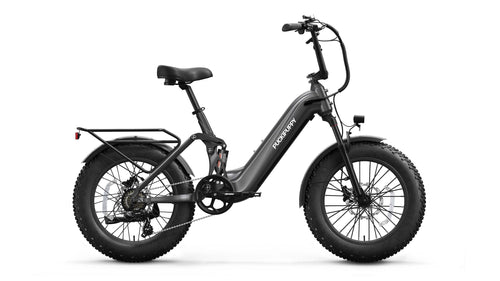















For many hunters, the most physically demanding part of the trip is not always the waiting or tracking. It is often the distance between the parking area and the hunting location.
Backpacks, tools, supplies, and cold-weather clothing can quickly add extra weight, while forest roads, gravel, hills, and soft ground can make a regular bicycle difficult to control. A hunting electric bike can help reduce unnecessary physical effort on these routes, allowing riders to save more energy for the outdoor activities that matter most.
Some riders need the added traction of a dual-motor system. Others care most about whether one charge can cover a long round trip. Some do not need the highest power output at all. They simply want a bike that can carry gear steadily and is easier to get on and off while wearing bulky outdoor clothing.
Based on these different needs, we compared five Puckipuppy hunting electric bikes by terrain, range, payload capacity, frame design, and everyday usability.

Quick Comparison of Puckipuppy Hunting Electric Bikes
|
Model |
Best For |
Key Advantage |
Battery and Range |
Motor Setup |
Frame Style |
|
GoldenR Pro |
Hills, gravel, and more challenging terrain |
Dual-motor traction for changing terrain |
48V 20Ah, approximately 40–80 miles |
1100W rated, 1600W peak |
Step-over frame |
|
Bulldog Pro |
Long-distance hunting routes |
Dual-battery system and extended range |
48V 15Ah × 2, approximately 80–130 miles |
750W rated, 1350W peak |
Step-over frame |
|
Labrador Pro |
Carrying gear, stability, and all-around outdoor riding |
400 lb payload capacity and balanced performance |
48V 20Ah, approximately 40–80 miles |
750W rated, 1350W peak |
Step-over frame |
|
Labrador Pro ST Camo |
Frequent stops and easier mounting |
Step-through frame and dual-sensor system |
48V 20Ah, approximately 40–80 miles |
750W rated, 1350W peak |
Step-through frame |
|
Boxer ST |
Campground roads and general outdoor routes |
Comfortable, practical, and well-balanced performance |
48V 20Ah, approximately 40–80 miles |
750W rated, 960W peak |
Step-through frame |
GoldenR Pro: Better for Hills and More Challenging Terrain
If your hunting route includes long climbs, loose gravel, rolling forest roads, or sections where traction changes frequently, the GoldenR Pro is one of the stronger options to consider.
The biggest difference between this model and the others is its dual-motor setup. The front motor delivers 640W peak power, while the rear motor reaches 960W peak power, for a combined peak output of 1600W. Riders can switch between single-motor and dual-motor modes depending on the route, using less power on easier sections and calling on extra drive support when climbing hills or crossing softer ground.
The GoldenR Pro also comes with a 48V 20Ah battery, an estimated range of about 40 to 80 miles, and a maximum payload capacity of 400 pounds.
The real value of a dual-motor system is not simply faster acceleration. For hunting use, the greater advantage is that both wheels can contribute power when the route changes from hard-packed ground to gravel, dirt, or steeper slopes. This provides additional drive support when traction becomes less consistent.
The bike also features full suspension and fat tires, helping it handle tree roots, gravel, ruts, and repeated bumps along forest roads. Its torque sensor adjusts motor assistance based on how hard the rider pedals, creating a more natural power response. That is especially useful on sections where low-speed control matters more than raw speed.
The GoldenR Pro is better suited to riders who already have some experience with fat-tire bikes or outdoor riding. It offers more power in reserve, but the bike is also relatively heavy. On narrow trails where frequent turnarounds are required, or on sections where the bike must be pushed around fallen trees or other obstacles, the weight may become more noticeable than the motor output listed on the spec sheet.
If your route is mostly made up of flat campground roads or well-maintained hard-packed trails, you may not use the dual-motor system often enough to justify it. In that case, a model with more range or easier mounting may fit your everyday needs better.
GoldenR Pro Ebike
Bulldog Pro: Better for Long-Distance Hunting Routes
If your main concern is not whether the bike has enough power, but whether one charge can cover the entire round trip, the Bulldog Pro is likely the better fit.
It uses two 48V 15Ah batteries for a combined capacity of 30Ah and an estimated range of about 80 to 130 miles. Compared with a standard single-battery model, this dual-battery setup gives riders more reserve for long forest roads, campground travel, and extended outdoor routes.
For hunting trips, long range is about more than simply traveling farther. Real routes are often affected by detours, return trips to camp, searching for access points, or changes in the day’s plan. The Bulldog Pro’s dual-battery system leaves more room for those unexpected changes.
It also features a 750W rated motor with 1350W peak output, pedal-assist speeds of up to about 28 mph, and a maximum payload capacity of 400 pounds. That gives it enough carrying capacity for the rider, a backpack, and common outdoor gear.
Full suspension and fat tires also make it suitable for campground roads, gravel, and typical forest routes—not just long-distance riding.
The Bulldog Pro’s weight, however, is something riders should consider carefully. While the dual-battery setup is a major advantage on the trail, the extra weight becomes more noticeable when lifting the bike onto a vehicle rack, carrying it over steps, or pushing it around fallen trees.
Bulldog Pro Ebike
Labrador Pro: Better for Carrying Gear and Balanced Outdoor Riding
Not every hunting route requires dual motors or dual batteries. For riders who care more about payload capacity, stability, braking performance, and overall practicality, the Labrador Pro offers a more balanced option.
It is equipped with a 750W rated motor, 1350W peak output, a removable 48V 20Ah battery, an estimated range of about 40 to 80 miles, and a maximum payload capacity of 400 pounds. Hydraulic disc brakes, full suspension, 26-inch fat tires, and an 8-speed drivetrain allow it to cover campground roads, gravel routes, mild climbs, and general forest riding.
The main strength of the Labrador Pro is not one standout specification, but the balance between its features. For riders carrying backpacks, tools, and supplies, the Labrador Pro combines a 400-pound total payload rating with hydraulic braking and full suspension, without the added weight of a dual-battery setup.
Hydraulic disc brakes also become more important when carrying extra weight, descending hills, or riding across surfaces with changing traction. As total bike weight increases, stopping distance and handling can change, so predictable braking often matters more than a higher top speed.
The Labrador Pro uses a step-over frame, with a riding position that feels closer to a traditional electric mountain bike. Its recommended rider height range is approximately 5 feet 4 inches to 6 feet 6 inches, making it a practical option for taller riders as well.
Labrador Pro
Labrador Pro ST Camo: Better for Frequent Stops and Easier Mounting
Hunting-season riding is not always one long, uninterrupted trip. Checking maps, watching the route ahead, adjusting gear, and moving between different sections can require frequent stops. In that kind of use, how easy the bike is to mount and dismount may matter more than peak motor output.
The Labrador Pro ST Camo uses a step-through frame, so riders do not have to lift a leg over a high top tube. When wearing a heavy jacket, hunting pants, boots, or a loaded backpack, this frame design can make getting on and off the bike much easier.
It comes with a 750W rated motor, 1350W peak output, a 48V 20Ah battery, an estimated range of about 40 to 80 miles, and a maximum payload capacity of 400 pounds. Front and rear suspension, 26 x 4-inch fat tires, and a dual-sensor system using both torque and cadence sensing give it a more complete balance of comfort, stability, and pedal-assist response.
The torque sensor adjusts assistance based on how hard the rider pedals, while the cadence sensor continues supporting the rider as the pedals turn. Together, they create a smoother response when starting, riding slowly, or moving through changing terrain. For routes that involve repeated slowing, stopping, and restarting, that kind of assistance can feel easier to manage.
The camouflage finish also gives the bike a clear hunting-season look, but the real reasons to consider it are the step-through frame, full suspension, fat tires, and useful range—not simply the color.
This model is especially well suited to riders who do not want to make a high leg swing every time they stop. It can also be a better fit for shorter riders or anyone who finds a high step-over frame inconvenient when wearing boots, bulky clothing, or a loaded backpack.
Labrador Pro ST
Boxer ST: Better for Campground Roads and General Outdoor Routes
If most of your riding takes place on campground roads, well-maintained gravel, and moderately difficult outdoor routes, the Boxer ST offers a simpler and more balanced choice.
It is equipped with a 750W rated motor, 960W peak output, a 48V 20Ah battery, full suspension, an estimated range of about 40 to 80 miles, and a maximum payload capacity of 400 pounds. It also uses a step-through frame and 180mm hydraulic disc brakes.
Compared with the Labrador Pro ST, the Boxer ST has lower peak power and does not feature the same torque-and-cadence dual-sensor system. Even so, it still includes the practical features many riders want for campground roads, gentler forest routes, and weekend outdoor riding, including fat tires, suspension, hydraulic brakes, and useful range.
It is also a practical option for first-time fat-tire e-bike buyers or riders who already know their routes do not include long, steep climbs or difficult mud. The bike does not demand advanced riding habits, and riders do not have to accept the extra weight that often comes with more extreme performance.
It is also a strong choice for anyone who values simple controls and everyday comfort. The step-through frame makes stopping and restarting easier, especially during a day that includes several short rides.
Boxer ST
Match the Bike to Your Hunting Route
Long-Distance Rides: Bulldog Pro
With dual batteries and an estimated range of 80 to 130 miles, the Bulldog Pro is better for longer round trips and routes with limited charging access. It also provides more reserve for hills, cold weather, and heavier gear.
Hills and Changing Terrain: GoldenR Pro
The GoldenR Pro’s dual-motor system is better suited to climbs, loose gravel, and uneven ground. Riders can use single- or dual-motor mode depending on how much traction and power the route requires.
Carrying More Gear: Labrador Pro
With a 400-pound total payload rating, hydraulic disc brakes, and full suspension, the Labrador Pro is a balanced option for riders carrying backpacks, tools, and outdoor supplies.
Frequent Stops: Labrador Pro ST Camo
Its step-through frame makes it easier to stop, put a foot down, and get back on the bike while wearing bulky clothing or carrying gear.
Campground Roads and Moderate Routes: Boxer ST
The Boxer ST is a practical choice for campground roads, hard-packed trails, and ordinary gravel. It offers fat tires, full suspension, hydraulic brakes, and useful range without the extra weight of dual motors or dual batteries.

Dual Motors or Dual Batteries: Which Should You Choose?
Choose dual motors when traction and terrain are the main concern. Choose dual batteries when distance and return-trip range are the priority.
The GoldenR Pro and Bulldog Pro are designed around two different types of hunting routes. The GoldenR Pro uses a dual-motor system to provide additional drive support when the terrain becomes steeper, softer, or less predictable. This makes it more suitable for hills, loose gravel, dirt, and routes where traction can change from one section to the next.
The Bulldog Pro takes a different approach. Its dual-battery system is designed to extend riding distance and provide more usable battery reserve. It is the better option for long round trips, remote areas with limited charging access, and riders who want extra capacity for detours, cold weather, heavier gear, or changes in the day’s route.
The choice comes down to the main challenge of your ride:
- If you are most concerned about getting through steep or loose sections, dual motors are likely to offer more practical value.
- If you are most concerned about completing the full route and returning with battery to spare, dual batteries are usually the better investment.
There is no need to chase every high-end feature at once. The right hunting e-bike should solve the problem you are most likely to face on your actual route.
Before You Ride
Before leaving, check the battery level, tire pressure, brakes, lights, rear-rack security, and total gear weight. Keep enough battery in reserve for the return trip, since hills, cold weather, high assist levels, low tire pressure, and heavier loads can reduce actual range.
E-bike access rules vary by land manager, trail classification, and local regulations. Confirm that your bike is allowed on the specific forest road, public land, or hunting route before riding.
For a full breakdown of motor power, range, tires, suspension, brakes, and payload, read the Hunting Ebike Buying Guide.
Choose the Right Riding Partner for Your Hunting Route
A good hunting electric bike does not need to have the highest specifications in every category. It needs to match the route you actually ride.
The GoldenR Pro, Bulldog Pro, Labrador Pro, Labrador Pro ST Camo, and Boxer ST are designed around different riding needs. Start by identifying the route conditions and practical challenges you are most likely to face, then choose the model that addresses them.
That approach is more reliable than comparing motor power or top speed alone.
🧭 Getting ready for a new hunting season? Explore Puckipuppy Hunting Electric Bikes and find a model that better matches your riding distance, terrain, and gear-carrying needs.