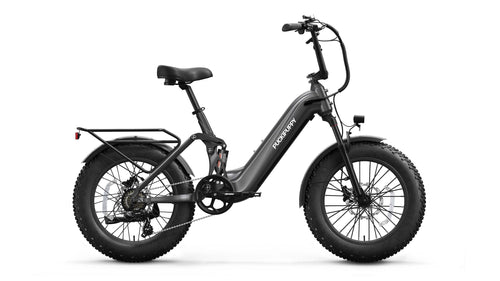















Fat-tire electric bikes can generally be ridden on public roads, neighborhood streets, and some on-street bike lanes where regular bicycles are allowed. However, sidewalks, separated bike paths, multi-use paths, mountain bike trails, and natural-surface trails on public land may have different restrictions based on the e-bike’s class, motor power, assisted speed, and throttle use.
When deciding whether a fat-tire e-bike is allowed in a particular area, do not base the answer only on tire width or off-road capability. The key questions are whether the bike meets the local legal definition of an electric bicycle, whether it is classified as a Class 1. Class 2. or Class 3 e-bike, and whether the agency or organization managing the road, park, path, or trail allows that type of e-bike.
Put simply:
Fat tires determine what types of terrain the bike can handle more comfortably. The bike’s class and local regulations determine where it can legally be ridden.
Disclaimer: This article is for general informational purposes only. E-bike access and riding rules vary by location and may change over time. Always check current rules with the relevant local authority or land manager before riding.
Quick Guide: Where Can You Ride a Fat-Tire E-Bike?
|
Location Type |
General Rule |
What to Check Before You Ride |
|
Public roads and on-street bike lanes |
Usually allowed |
Confirm that bicycles are permitted and that the bike meets the local legal definition of an e-bike. |
|
Sidewalks, separated bike paths, and multi-use paths |
Not always allowed |
Check city or county rules, posted signs, and which e-bike classes are permitted. |
|
Motorized roads and motorized trails |
More likely to allow e-bikes |
Confirm that your vehicle type is allowed and check for seasonal closures, permits, or registration requirements. |
|
Non-motorized trails and mountain bike trails |
Do not assume they are allowed |
Look for rules that specifically permit your e-bike class on that trail. |
|
National parks, national forests, and BLM-managed land |
Depends on the specific route |
Check the land manager’s website, official trail maps, and current closure or access notices. |
|
Designated Wilderness areas |
Not allowed |
Traditional bicycles and e-bikes are both prohibited in federally designated Wilderness areas. |
Before You Ride, Confirm Your E-Bike Class
Your e-bike class can directly affect whether the bike is allowed on bike paths, multi-use paths, and natural-surface trails.
Specific definitions and access rules may vary by state and land management agency. Before riding, check both the classification label on your e-bike and the applicable local regulations.
Related Reading: What’s the Difference? Class 1 vs. Class 2 vs. Class 3 E-Bikes

Can You Ride on Public Roads, Bike Lanes, and Sidewalks?
Fat-tire e-bikes that meet the local definition of an e-bike can generally be ridden on public roads and on-road bike lanes where conventional bicycles are allowed.
When riding on public roads, travel in the same direction as traffic and follow all traffic signals, road signs, and local speed limits. Use extra caution at intersections, near parked vehicles, and around driveway or garage exits. Watch for turning vehicles, opening car doors, and vehicles crossing the bike lane.
Fat-tire e-bikes are typically heavier than conventional bicycles. Their wider tires can improve stability on certain surfaces, but the added weight may require more distance when turning, riding downhill, or making an emergency stop.
Sidewalk rules are usually determined by individual cities or counties. Some areas allow low-speed bicycle and e-bike riding on sidewalks in residential neighborhoods but restrict it in business districts, downtown areas, or other places with heavy pedestrian traffic.
Can You Ride on Bike Paths and Multi-Use Paths?
Access to a separated bike path or multi-use path usually depends on which e-bike classes are permitted on that specific route.
In general, Class 1 e-bikes are the most widely accepted on shared-use paths. Class 2 e-bikes may be restricted because they have a throttle, while Class 3 e-bikes are more likely to face restrictions because of their higher assisted speed. However, these are only common patterns, not nationwide rules that apply to every path in the United States.
Before entering a path, check the following:
- Whether e-bikes are allowed
- Whether Class 1. Class 2. or Class 3 e-bikes are permitted
- Whether throttle use is restricted
- Whether the path has a separate speed limit
Multi-use paths are shared by cyclists, pedestrians, runners, and other users. Even if an e-bike is capable of reaching 20 mph or 28 mph, that does not mean it is appropriate to maintain those speeds on a shared path.
Slow down before blind turns, intersections, and areas where children or pets are present. Before passing a pedestrian or another cyclist, use a bell or give a clear verbal warning.
Rail trails, river trails, and greenways may also be managed in separate sections by different agencies. Just because e-bikes are allowed on the first part of a route does not mean the same rules apply to every section.

Can Fat-Tire E-Bikes Be Ridden on Natural-Surface Trails?
Yes, but only on trails that clearly allow the applicable e-bike class.
When evaluating a natural-surface trail, do not look only at whether conventional bicycles are allowed. First determine whether the route is classified as a motorized route or a non-motorized trail.
Motorized Roads and Motorized Trails
Motorized roads and motorized trails are generally more likely to allow e-bikes. However, the term “motorized” does not mean that every type of electric two-wheeled vehicle is automatically permitted.
Before riding, confirm that the vehicle meets the local definition of an e-bike, that two-wheeled vehicles are allowed on the route, whether an OHV permit or trail pass is required, and whether the route is currently open.
High-powered, speed-modified, or otherwise noncompliant models may be regulated as OHVs, mopeds, or other motor vehicles rather than as e-bikes.
Non-Motorized Trails and Mountain Bike Trails
A sign that says “Bicycles Allowed” does not automatically mean “E-Bikes Allowed.”
Some non-motorized trails allow only Class 1 e-bikes. Others allow multiple e-bike classes, while some prohibit e-bikes entirely.
Common signs and notices include:
- E-Bikes Allowed
- Class 1 Only
- No E-Bikes
- Traditional Bicycles Only
- No Throttle Use
Mountain bike trails and singletrack routes may also have one-way travel rules, technical difficulty ratings, trail pass requirements, and specific right-of-way expectations. Fat tires and suspension can help a bike travel over roots, gravel, and uneven ground, but those features do not change whether the bike is legally allowed on the trail.
Being able to ride a trail does not mean the bike is permitted to enter it.
Wet Conditions and Temporary Closures
Do not enter a trail that is marked with a wet-trail closure or closed because of wildfire, snow, construction, or wildlife protection.
Although fat tires may provide additional traction in mud, riding after heavy rain can still create deep ruts, damage drainage systems, and widen the trail.

How Do You Check E-Bike Rules in National Parks, National Forests, and on BLM Land?
Federal public lands in the United States do not follow one universal access rule for every route. Riders must check the specific park, forest, management area, and trail they plan to visit.
|
Land Type |
General Guidance |
What to Check Before Riding |
|
National Park |
Rules are determined by the individual park and route |
The park’s e-bike page, permitted classes, and temporary closures |
|
National Forest |
Open motorized roads and trails are generally available |
The Motor Vehicle Use Map, permitted vehicle types, and seasonal access |
|
BLM Land |
Look first for motorized areas and OHV trails |
The local field office, route maps, and vehicle classifications |
|
Wilderness |
Bicycles and e-bikes are not allowed |
Confirm the boundaries of the designated Wilderness area |
National Parks
The National Park Service allows individual park superintendents to permit e-bikes on appropriate roads and trails, generally only in places where conventional bicycles are already allowed. Each park may apply different class restrictions, and different routes within the same park may follow different rules.
Conventional bicycles and e-bikes remain prohibited in designated Wilderness areas.
Some parks also restrict throttle-only operation on Class 2 e-bikes. Except in areas open to public motor vehicles, riders may be required to pedal continuously rather than using the motor alone. Before visiting a national park, check that park’s specific e-bike information page.
National Forests
In U.S. national forests and grasslands, Class 1. Class 2. and Class 3 e-bikes may generally be used on motorized roads and motorized trails that are already open to motor vehicles.
Some routes that were previously classified as non-motorized may be opened to specific e-bike classes after a separate review. However, riders should not assume that every mountain bike trail allows e-bikes.
Before riding, review the Motor Vehicle Use Map for the specific national forest. This map identifies which roads and trails are open to motor vehicles, which vehicle types are allowed, and when seasonal access applies. Wildfire conditions, snow, construction, and temporary closures may still override the map, so always check current notices before departure.
BLM Land
On public lands managed by the Bureau of Land Management, motorized areas and OHV trails often provide the clearest opportunities for e-bike access.
Some non-motorized roads and trails may also be opened to specific e-bike classes through local land-management decisions, but they are not automatically open to all e-bikes.
Under the BLM definition, an e-bike must have fully operable pedals, a motor rated at no more than 750 watts, and meet the requirements for Class 1. Class 2. or Class 3. Higher-powered or speed-modified vehicles may instead be regulated under other motor vehicle or OHV rules.
To learn more about state-specific laws covering e-bike classes, motor power, riding locations, licensing, registration, and helmet requirements, read Your 2026 Guide to Electric Bike Laws.

What Types of Surfaces Are Fat-Tire E-Bikes Best Suited For?
Once you confirm that e-bikes are allowed on a route, the next step is to determine whether fat tires are suitable for the actual riding surface.
|
Surface Type |
How Fat Tires Perform |
What to Watch For |
|
Paved roads |
Help absorb bumps from cracks, seams, and small potholes |
Higher rolling resistance; avoid using excessively low tire pressure for long periods |
|
Gravel roads and open forest roads |
Generally provide better stability on loose gravel than narrow tires |
Loose surfaces and downhill sections can increase stopping distance |
|
Firm sand and packed sand |
A larger contact area helps prevent the tires from sinking quickly |
Deep, soft sand can significantly increase battery use |
|
Light snow and packed snow |
Provide better flotation and stability |
Deep snow and icy slopes can still cause loss of control |
|
Campgrounds and RV parks |
Well suited for short trips and uneven campground roads |
Follow campground speed limits and pedestrian-zone rules |
On paved roads, fat tires can improve riding comfort, but wider tires and a heavier bike may also create more rolling resistance.
On gravel roads and open forest roads, fat tires usually make it easier to maintain stability. However, loose gravel can still increase braking distance. Slow down before long descents and make sure you have enough battery power left for the return trip.
Fat tires are also better suited for firm sand, packed sand, and light snow, but that does not mean they can easily handle every area of deep sand or deep snow. The softer the surface, the harder the motor and battery generally have to work.
Beaches, groomed winter trails, and private campgrounds may also have separate rules covering operating hours, minimum tire width, tire pressure, throttle use, and speed. Always check the local requirements before entering.
How to Quickly Confirm a Route Before You Ride
Before leaving, use the following four-step process.
Step 1: Confirm Your E-Bike’s Specifications
Check the bike’s classification label and technical specifications to confirm:
- E-bike class
- Rated motor power
- Whether the bike has a throttle
- The speed at which motor assistance stops
A bike that has been speed-unlocked, fitted with a more powerful motor, or otherwise modified may no longer meet the local definition of a Class 1. Class 2. or Class 3 e-bike. It may instead be regulated as a moped, OHV, or another type of motor vehicle.
Step 2: Identify the Route Manager
First determine which agency or organization manages the route. Common land managers include:
- National Park Service
- U.S. Forest Service
- Bureau of Land Management
- State park agencies
- City, county, or regional park districts
A single greenway, rail trail, or river trail may be divided into sections managed by different agencies. Make sure you check the rules for the specific section you plan to ride.
Step 3: Check the Appropriate Official Route Information
|
Route Type |
Official Resource |
What to Check |
|
National Park |
NPS E-Bikes: https://www.nps.gov/subjects/biking/e-bikes.htm |
The individual park’s biking page, permitted classes, alerts, and Superintendent’s Compendium |
|
National Forest |
Forest Service Maps: https://www.fs.usda.gov/visit/maps |
The Motor Vehicle Use Map, permitted vehicle types, open seasons, and temporary closures |
|
BLM Public Land |
BLM Visit: https://www.blm.gov/visit |
Permitted e-bike classes, motorized routes, OHV areas, and local field office rules |
|
State Park |
The official state parks website for that state |
Park maps, trail rules, permitted classes, and seasonal closures |
|
City, County, or Regional Trail |
The official city, county, or park district website |
Trail rules, park ordinances, speed limits, and entrance signs |
When searching for a specific route, enter the route name, the term “e-bike,” and the official domain of the managing agency into Google.
For example:
- "Park Name" e-bike site:nps.gov
- "Forest Name" e-bike site:fs.usda.gov
- "Forest Name" MVUM site:fs.usda.gov
- "Trail Name" e-bike rules site:.gov
- "City or County Name" electric bicycle ordinance site:.gov
National policy pages are useful for understanding general rules, but the final decision about whether an e-bike is allowed on a specific route should come from the individual park, national forest, BLM management area, or local agency responsible for that route.

Step 4: Confirm the Specific Restrictions and Current Conditions
Once you find the route page, check:
- Whether e-bikes are allowed
- Whether Class 1. Class 2. or Class 3 e-bikes are permitted
- Whether throttle use is restricted
- Whether the route has a separate speed limit
- Whether a trail pass, OHV permit, or other permit is required
- Whether seasonal, weather-related, or temporary closures are in effect
When different pages provide conflicting information, give priority to the route’s formal regulations, official maps, current alerts, and posted entrance signs.
Google Maps, AllTrails, Trailforks, and route reports from other riders can help with trip planning, but they do not replace the official rules published by the land manager.
The simplest method is to confirm your e-bike class, identify the route manager, review the rules for the specific route, and check the current operating status again on the day of your ride.
Confirm the Route Before Choosing a Fat-Tire E-Bike
Fat-tire e-bikes can be used on public roads, on-road bike lanes, gravel roads, campground roads, firm sand, light snow, and certain outdoor trails. However, access is determined primarily by the bike’s class and the rules of the managing agency, not by tire width.
After confirming that your regular routes allow the appropriate e-bike class, compare tire width, suspension, frame design, and range based on the surfaces you expect to ride.
🚲After confirming the rules for your regular routes, explore Puckipuppy fat-tire e-bikes and compare tire, suspension, and range configurations for the surfaces you plan to ride.