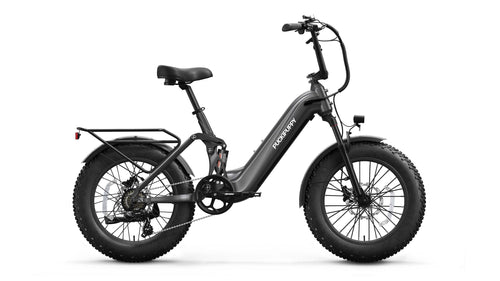















Off-road riding can mean loose gravel, steep hills, rough forest roads, or long routes far from a charging point. A bike that performs well in one of these conditions may not be the best choice for another, so the right model depends on how its traction, suspension, battery capacity, braking, and weight match your route.
Within the PUCKIPUPPY off road ebikes, the Labrador Pro offers the most balanced setup for rough trails and mixed terrain. The GoldenR Pro adds dual-motor traction for steep hills and loose surfaces, the Bulldog Pro prioritizes dual-battery range for longer adventures, and the Boxer focuses on stable, comfortable riding across gravel roads, campground routes, and light trails.
This guide compares where each model performs best and the practical trade-offs to consider before choosing.

Best Off-Road Electric Bikes at a Glance
|
Model |
Best For |
Motor Power |
Battery and Range |
Suspension |
Weight |
Main Trade-Off |
|
Labrador Pro |
Rough forest roads and mixed terrain |
750W, 1350W peak |
48V 20Ah, 40–80 miles |
Full suspension with 110mm adjustable fork |
85.7 lbs |
Less agile than a lighter, trail-focused eMTB |
|
GoldenR Pro |
Steep hills and loose terrain |
Dual motor, 1100W rated and 1600W peak |
48V 20Ah, 40–80 miles |
Full suspension with 130mm adjustable fork |
92.6 lbs |
Dual-motor use increases weight and energy consumption |
|
Bulldog Pro |
Long-distance weekend adventures |
750W, 1350W peak |
Dual 48V 15Ah batteries, 80–130 miles |
Full suspension with 110mm adjustable fork |
94.1 lbs |
More difficult to lift, store, and transport |
|
Boxer |
Gravel roads and comfortable recreational riding |
750W, 960W peak |
48V 20Ah, 40–80 miles |
Full suspension with 130mm adjustable fork |
85.6 lbs |
Less suited to steep climbs where additional traction is needed |
Overall Off-Road Electric Bike: PUCKIPUPPY Labrador Pro
The PUCKIPUPPY Labrador Pro is the most balanced choice for riders who regularly move between rough forest roads, gravel, hills, and paved routes. Its combination of responsive pedal assistance, full suspension, fat tires, and hydraulic braking supports varied terrain without focusing too heavily on one specific type of riding.
Why It Works on Rough and Changing Terrain
The 750W motor reaches 1350W at peak output, providing additional support for climbs, quick starts, and routes carrying extra gear. Torque and cadence sensors adjust assistance according to both pedal pressure and movement, helping the bike deliver smoother power as the terrain or gradient changes.
A 110mm adjustable front fork and rear suspension help absorb repeated impacts from gravel, potholes, and uneven trails. The 26×4-inch fat tires add stability and traction on loose surfaces, while the Shimano eight-speed drivetrain gives riders more control over cadence on climbs and flatter sections. Hydraulic disc brakes provide controlled stopping power for descents and heavier off-road riding.
Best For
-
Rough forest roads and gravel routes
-
Hills and frequently changing terrain
-
Mixed paved and unpaved weekend rides
-
Riders seeking one versatile outdoor e-bike
Consider Before Buying
At 85.7 pounds, the Labrador Pro is more difficult to lift or transport than a lightweight electric mountain bike. Its wide tires also create more rolling resistance on smooth pavement, and the heavier, stability-focused design is less agile on narrow technical trails with frequent sharp turns.
Labrador Pro Ebike
Dual-Motor Off-Road E-Bike for Hills: PUCKIPUPPY GoldenR Pro
The PUCKIPUPPY GoldenR Pro is designed for riders who need stronger traction on steep climbs, loose gravel, sand, and uneven outdoor routes. Its dual-motor system can drive both wheels when additional grip is needed, making it more suitable for demanding terrain than a conventional single-motor setup.
Why Dual Motors Matter on Loose Terrain
The front and rear motors produce 1100W of rated power and up to 1600W of combined peak output. By distributing power between both wheels, the system can improve low-speed climbing support and help the bike maintain traction when the surface becomes loose or uneven.
A torque and cadence sensor adjusts assistance according to pedaling effort and movement, providing more controlled power as the gradient changes. Full suspension, a 130mm adjustable front fork, 26×4-inch fat tires, and hydraulic disc brakes further support stability, impact absorption, and braking control on rough routes.
Best For
-
Steep hills and uneven climbs
-
Loose gravel, dirt, and sand
-
Riders carrying additional outdoor equipment
-
Routes where traction matters more than low bike weight
Consider Before Buying
The GoldenR Pro weighs 92.6 pounds, so lifting it onto a vehicle rack or carrying it upstairs can be difficult. Using both motors also consumes battery power more quickly, which means riders may not achieve the maximum advertised range on steep or demanding routes. On flatter roads, single-motor operation may be sufficient and more energy-efficient.
GoldenR Pro
Long-Range Off-Road E-Bike: PUCKIPUPPY Bulldog Pro
The PUCKIPUPPY Bulldog Pro is the best choice in this lineup for long weekend rides, forest-road exploration, and outdoor routes with limited charging access. Its dual-battery system provides greater range and more flexibility when planning longer trips, while full suspension and fat tires support comfort across changing terrain.
Why Dual Batteries Help on Weekend Adventures
The two removable 48V 15Ah batteries provide 30Ah of total capacity and an advertised range of 80 to 130 miles. This additional capacity gives riders more room for hills, rough surfaces, higher assistance levels, equipment weight, and unexpected route changes without relying on the maximum range as an exact travel limit.
A 750W motor with 1350W peak output supports climbs and heavier loads, while torque and cadence sensors adjust assistance according to pedaling effort and movement. The full-suspension system, 110mm adjustable front fork, and 26×4-inch fat tires help reduce fatigue on long gravel and forest-road rides. Hydraulic disc brakes and a Shimano eight-speed drivetrain provide additional control as gradients and surfaces change.
Best For
-
Long forest-road and mixed-terrain rides
-
All-day recreational trips
-
Camping, hunting, and outdoor exploration
-
Routes with limited charging access
-
Riders carrying additional gear
Consider Before Buying
At 94.1 pounds, the Bulldog Pro is the heaviest model in this comparison and may require a heavy-duty vehicle rack for transport. Its dual batteries also take longer to charge, while steep hills, soft terrain, cold weather, and high assistance levels can reduce the advertised range. Riders taking shorter gravel or recreational trips may not need the added battery capacity and weight.
Bulldog Pro Ebike
For Gravel and Comfortable Weekend Riding: PUCKIPUPPY Boxer
The PUCKIPUPPY Boxer is a practical choice for riders who prioritize comfort and predictable handling on gravel roads, campground routes, broken pavement, and wide forest paths. It provides enough power for moderate hills and mixed terrain without the additional weight and battery consumption of a dual-motor system.
Why It Works for Gravel and Recreational Riding
The 750W motor reaches 960W at peak output, providing steady assistance for gravel routes, gradual climbs, and rides carrying additional gear. Its 26×4-inch fat tires create a stable contact area on loose stones and uneven surfaces, helping the bike feel controlled when road conditions change.
A 130mm adjustable front fork and rear suspension reduce vibration and absorb impacts from potholes, ruts, and rough tracks. The 180mm hydraulic disc brakes provide controlled stopping power, while the 48V 20Ah removable battery supports an advertised range of 40 to 80 miles for recreational and mixed-terrain rides.
Best For
-
Gravel roads and campground routes
-
Wide forest paths and light trails
-
Broken pavement and rough neighborhood streets
-
Comfortable weekend exploration
-
Riders who value stability over technical trail agility
Consider Before Buying
The Boxer uses a single rear motor, so it does not provide the same climbing traction as the dual-motor GoldenR Pro on steep or loose surfaces. At 85.6 pounds, it also requires a compatible heavy-duty rack for vehicle transport. Riders planning technical singletrack or long routes far from charging access may be better served by the Labrador Pro or Bulldog Pro.
Boxer
Which PUCKIPUPPY Off-Road E-Bike Should You Choose?
|
Your Main Riding Need |
Recommended Model |
Why |
|
Rough trails and frequently changing terrain |
Labrador Pro |
Balanced power, responsive pedal assistance, full suspension, and stable fat tires |
|
Steep hills and loose surfaces |
GoldenR Pro |
Dual-motor power supports stronger climbing assistance and traction |
|
Long routes with limited charging access |
Bulldog Pro |
Dual batteries provide greater range and more flexibility for longer trips |
|
Gravel roads and comfortable weekend riding |
Boxer |
Stable handling, full suspension, and a comfort-focused single-motor setup |
|
Regular transitions between paved and unpaved roads |
Labrador Pro or Boxer |
Both provide fat-tire stability and suspension without requiring a dual-motor system |
|
Carrying equipment over demanding terrain |
GoldenR Pro |
Dual-motor assistance and a 400-pound payload capacity support heavier riding demands |
What Features Matter Most on an Off-Road Electric Bike?
Rated Power, Torque, and Power Delivery
Peak wattage represents short-duration output, so it should not be used alone to judge climbing ability. Low-speed performance also depends on torque, controller calibration, gearing, pedal-assist response, and whether the tires can transfer power without slipping. Dual motors can provide additional drive force on steep or loose terrain, but abrupt power delivery may still cause wheelspin.
What to look for: Choose controllable assistance and appropriate traction for your terrain rather than simply selecting the highest peak-wattage figure.
Tires, Tread, and Tire Pressure
Tire width affects flotation, stability, steering response, and rolling resistance, while tread design determines how effectively the tire clears loose dirt and maintains grip. Wider tires can feel more stable on gravel, sand, and rough roads, but they may steer more slowly and require more energy on pavement.
Tire pressure must also match the rider’s weight, cargo, surface, and tire construction. Excessive pressure reduces compliance and grip, while insufficient pressure can increase sidewall deformation, rim strikes, and unstable cornering.
What to look for: Prioritize tread and tire volume that match your main surface, and confirm that the manufacturer provides a usable pressure range for different loads and terrain.

Suspension Travel and Adjustability
Fork travel shows how much movement is available, but suspension performance also depends on spring rate, sag, compression control, and rebound speed. A setup that is too soft may dive under braking or bottom out, while one that is too firm can deflect off obstacles and reduce tire contact.
Rebound should allow the suspension to recover between repeated impacts without extending so quickly that the bike feels unsettled. Riders carrying cargo or operating near the maximum payload may also need firmer suspension settings.
What to look for: Adjustable preload, compression, or rebound is valuable when rider weight, cargo, and terrain change regularly.
Gearing and Low-Speed Climbing Control
A powerful motor still needs suitable gearing to climb efficiently. Lower gears help the rider maintain a controlled cadence, reduce strain on the drivetrain, and prevent the motor from operating for long periods at low speed and high load.
Riders should shift into an easier gear before the climb becomes steep rather than changing gear under maximum pedal and motor pressure. A wider gear range is especially useful on routes that alternate between steep climbs, descents, and flatter gravel sections.
What to look for: Choose a drivetrain with sufficiently low climbing gears and a range that matches the elevation changes on your regular routes.
Compare Battery Energy in Watt-Hours
Battery energy should be compared in watt-hours rather than amp-hours alone. Watt-hours are calculated by multiplying voltage by amp-hours, so a 48V 20Ah battery stores 960Wh, while two 48V 15Ah batteries provide 1,440Wh in total.
Actual range depends on energy consumption per mile, which rises with steep climbs, loose ground, low tire pressure, higher assistance levels, cold weather, heavier loads, and repeated acceleration. Longer off-road rides should always be planned with reserve energy for the return trip.
What to look for: Compare total watt-hours and choose enough capacity for the complete route under realistic conditions—not only the advertised maximum range.
Brake Performance and Heat Management
Hydraulic brakes generally provide better lever modulation, but reliable stopping also depends on rotor diameter, caliper design, pad compound, and heat dissipation. Larger rotors can increase mechanical leverage and manage heat more effectively during long descents.
Heavy e-bikes carrying riders and equipment generate more braking energy, which can overheat unsuitable pads or rotors and cause brake fade. Wet conditions, mud, and loose gravel also increase the need for predictable braking control.
What to look for: Heavier bikes and routes with long descents benefit from hydraulic brakes, appropriately sized rotors, and replaceable pads designed for higher thermal loads.
Rider Fit and Payload
Maximum payload includes the rider, clothing, accessories, racks, and cargo—not only body weight. Additional load increases suspension sag, tire deformation, braking demand, drivetrain stress, and battery consumption.
Fit should be evaluated through reach, standover height, saddle adjustment, handlebar position, and the rider’s ability to control the bike while standing or stopping. A broad recommended height range does not guarantee a comfortable fit for every rider.
What to look for: Confirm both total payload and key fit dimensions, especially when carrying outdoor equipment or riding near the bike’s stated weight limit.
Which Off-Road E-Bike Is Best for Your Next Ride?
Before choosing, consider the full round-trip distance, elevation, surface conditions, rider and cargo weight, and how the bike will be transported. Matching the motor, battery, suspension, and tire setup to these practical needs will provide more value than selecting a bike by peak power alone.
Explore PUCKIPUPPY off-road electric bikes and choose the model built for your next outdoor route.