




















Disclaimer: This article provides general educational information about US electric bicycle regulations and pet transportation as of October 2026. It does not constitute legal advice. Rules may vary by state, municipality, park, vehicle configuration, and time. Confirm applicable requirements with government authorities and relevant equipment manufacturers before riding.
Yes, you can legally ride an e-bike with your dog in many parts of the United States. However, whether a particular trip is allowed depends on the vehicle, how your dog travels, and the rules governing your route.
The important distinction is that there is no single nationwide rule covering every form of dog transportation on electric bikes. Instead, several layers of law can apply, including state vehicle classifications, local animal control ordinances, and park access regulations.
Here's how to understand those requirements, avoid common mistakes, and plan an electric bike ride with your dog in 2026.
What Are the E-Bike Laws for Dog Owners in the US?
Understanding electric bike classifications
Many states regulate electric bicycles using a three-class system, although the exact definitions are not identical nationwide.
|
E-bike class |
General characteristics |
Typical assisted speed limit |
|
Class 1 |
Motor provides assistance only while pedaling |
20 mph |
|
Class 2 |
Motor can propel the bicycle without pedaling |
20 mph |
|
Class 3 |
Motor assists while pedaling, subject to state-specific definitions |
Generally 28 mph |
These are general descriptions, not a substitute for an individual state's legal definitions. New York, for example, uses a different Class 3 framework, including a 25 mph limit and throttle assistance.
Vehicle classification matters because some parks and shared-use trails permit Class 1 e-bikes but restrict throttle-assisted models.
Motor power can also affect legal classification. California's Vehicle Code Section 312.5 defines an electric bicycle using fully operable pedals and a motor that does not exceed 750 watts, alongside additional class-specific requirements.
This means riders should check the manufacturer's rated motor specifications, the vehicle's classification label, and any applicable local restrictions rather than relying only on its advertised top speed.
Recommended reading: What's the Difference? Class 1 vs. Class 2 vs. Class 3 E-Bikes

How e-bike laws differ across four states
State laws establish the starting point, but they do not necessarily resolve every question about carrying a dog.
|
State |
Verified e-bike rules |
Additional considerations for dog owners |
|
California |
Electric bicycles must meet the legal definitions under Vehicle Code §312.5. Class 3 riders are subject to additional operating rules. |
Check municipal leash requirements, permitted trails, and whether the pet carrier interferes with vehicle operation. |
|
New York |
Qualifying e-bikes may operate on streets with posted speed limits of 30 mph or less. Sidewalk use generally requires local authorization, and public-land access is restricted unless designated. |
Confirm local park access, animal control rules, and whether the e-bike class is permitted in the municipality. |
|
Florida |
Under §316.20655, qualifying e-bikes generally receive bicycle rights and duties, while local governments and agencies retain specified powers to restrict use. |
Check restrictions on multiuse paths, local trails, beaches, and pet transportation. |
|
Texas |
Transportation Code Chapter 664 establishes electric bicycle classes and associated operating standards. |
Verify the vehicle's classification, local trail access, and animal control ordinances. |
Are Dog Carriers, Trailers, and Leashes Legal on E-Bikes?
How you transport your dog can create different legal and practical considerations.
Rather than assuming every pet carrier is allowed wherever bicycles are permitted, consider how the equipment affects your vehicle and whether local regulations address the arrangement.
Carrying a dog in a front or rear basket
A properly secured basket or pet carrier may be an option for a small dog, but riders need to consider more than the dog's weight.
The carrier should be designed for its intended use, securely mounted, and positioned so it does not interfere with steering, braking, or the rider's control.
It is also important to distinguish three different load limits:
- Total vehicle payload: The maximum load the bicycle is designed to support.
- Rack capacity: The separate weight limit for an individual front or rear rack.
- Pet carrier capacity: The maximum weight permitted by the carrier manufacturer.
These limits are not interchangeable. A bicycle with a high total payload rating may still have a rear rack that cannot safely support a particular dog and carrier combination.
Local regulations may also apply to how animals are restrained or transported.
Using a dog bike trailer
A dog bike trailer can provide an enclosed space for a larger pet, but there is no nationwide rule guaranteeing that every trailer is permitted on every bicycle route.
A trailer setup should be evaluated for:
- Compatibility between the hitch, axle, and bicycle frame.
- Maximum trailer and towing weight.
- Overall width and clearance on the intended route.
- Secure restraint and ventilation for the dog.
- Any applicable local trailer or pathway restrictions.
For example, narrow gates and barriers on recreational paths may make an otherwise functional trailer unsuitable for a particular route.
Manufacturer instructions are important, but they are not the same as traffic law. A trailer manufacturer approving a hitch connection does not automatically establish permission to operate that combination on every public trail.
For more practical equipment guidance, see our guide to carrying a dog on an e-bike or e-trike safely.
Riding an e-bike while walking your dog on a leash
Taking a dog along on a leash raises a different set of concerns.
The relevant rules may include local leash ordinances, traffic regulations governing vehicle control, and animal welfare laws.
Even where no specific ordinance prohibits cycling with a leashed dog, the practice can become dangerous when the animal suddenly changes direction, chases wildlife, or stops in front of the bicycle.
An electric bike may also maintain a pace that is uncomfortable or unsuitable for a running dog, especially in hot weather.
For ordinary transportation, a properly secured and compatible pet carrier or trailer generally provides a more controlled arrangement than holding a leash while riding.

Where Can You Legally Ride an E-Bike With Your Dog?
You can generally ride an e-bike with your dog on public roads and bike lanes where qualifying electric bicycles are permitted. However, sidewalks, shared-use trails, and national parks may have additional restrictions.
Two requirements matter: your e-bike must be allowed on the route, and your dog must comply with local pet regulations.
Public roads, bike lanes, and shared-use paths
In most cases, public roads and designated bike lanes are the easiest places to plan a legal e-bike ride with your dog, provided your vehicle meets state requirements.
However, the rules differ between states:
New York: Qualifying e-bikes can operate on roads with posted speed limits of 30 mph or less. Sidewalk riding is prohibited unless local law allows it. E-bikes are also prohibited on public lands, including parks, unless specifically authorized.
Florida: Under Florida Statutes §316.20655. qualifying e-bikes can generally use roads, bike lanes, and multiuse paths wherever conventional bicycles are permitted. However, local governments and trail authorities can restrict or prohibit e-bike access.
For dog owners, an additional consideration is whether local rules permit pets on the route and require specific restraint methods.
National parks: Yosemite and Acadia
National parks often have more specific rules governing e-bike classes, speed limits, and pet access.
Yosemite National Park, California
Yosemite has over 12 miles of paved bicycle paths in Yosemite Valley, with a 15 mph speed limit.
According to the National Park Service, e-bikes with two or three wheels, fully operable pedals, and motors rated below 750 watts are permitted wherever bicycles are allowed.
Dogs are also welcome on many paved roads, sidewalks, and bicycle paths unless signs indicate otherwise. Pets must be restrained on a leash no longer than six feet or otherwise physically restrained.
However, dogs are prohibited on most hiking trails, even when carried in baskets, backpacks, or other pet carriers.
Acadia National Park, Maine
Acadia allows Class 1 e-bikes on its historic carriage roads, while Class 2 and Class 3 e-bikes are prohibited. The speed limit is 20 mph.
Dogs are permitted on carriage roads but must remain properly restrained, with leashes limited to six feet. Additional restrictions apply in certain areas of the park.
This means a dog may be allowed on a carriage road even when the owner's particular e-bike is not.
Before riding with your dog, always verify both e-bike access and pet restrictions for your specific route. A legal vehicle and a pet-friendly destination do not automatically make every riding arrangement permissible.
What to Check Before Riding Somewhere New
Before traveling with your dog, follow this practical checklist:
- Identify your vehicle. Check the number of wheels, motor rating, operating modes, assisted speed, and legal classification.
- Check the route. Confirm whether the intended roads, bicycle lanes, or trails permit that vehicle category.
- Check pet restrictions. Review leash requirements, permitted pet areas, and any rules affecting animal transportation.
- Verify equipment limits. Confirm that the bicycle, rack, carrier, or trailer are compatible and used within their specified load ratings.
- Review current conditions. Look for temporary trail closures, special park notices, and weather conditions that may make the trip unsuitable.
For national parks, start with the park's official National Park Service website. For ordinary roads and local trails, consult state transportation agencies, city ordinances, and the authority responsible for the route.
Can You Be Held Responsible if Your Dog Causes an Accident?
Yes. Dog owners may be legally responsible if their pet causes an e-bike accident that injures another person or damages property. Liability depends on state law, the circumstances of the accident, and whether the owner failed to control the dog.
For example, a dog running beside an e-bike could suddenly pull toward another cyclist, while an unsecured pet carrier might cause the rider to lose control.
In California, the court case Delfino v. Sloan (1993) involved a cyclist injured after being chased and knocked down by a loose dog. The court recognized that violating a local leash ordinance could establish negligence even without a dog bite.
This illustrates an important distinction: a dog does not have to bite someone for its owner to face potential liability. However, the outcome of any individual accident depends on the applicable law and facts.
To reduce risks, keep your dog properly restrained, use secure and compatible transportation equipment, and follow local traffic and animal control regulations.
Choosing an E-Bike for Pet-Friendly Travel
Traveling with a dog means bringing along more than just your usual riding essentials. From pet carriers to water and supplies, having enough space and carrying capacity can make outings easier.
For dog owners considering a three-wheel option, the PUCKIPUPPY Husky Plus offers several features suited to pet-friendly travel:
- Three-wheel design: Provides additional stability when stopping or riding at low speeds.
- 500 lb maximum load capacity: Accommodates the combined weight of the rider, gear, and other supplies within the vehicle's overall limit.
- Rear storage basket: Offers convenient space for carrying pet essentials, such as water, treats, and travel accessories.
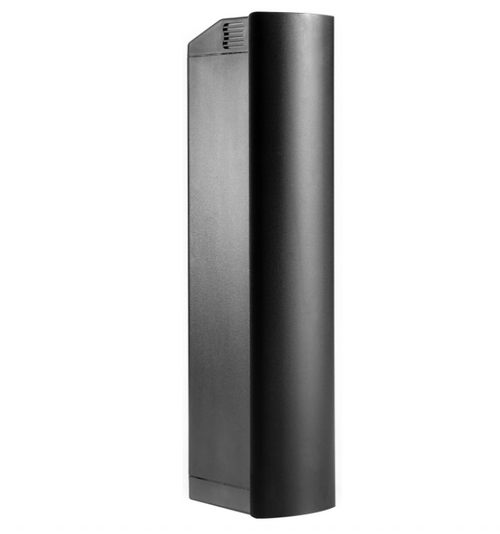
- 90–110 miles of estimated range: The dual-battery system provides flexibility for longer outings, depending on riding conditions and load.
Before heading out, ensure any pet carrier is compatible, securely installed, and within its own weight limit. Always check local e-bike regulations for your planned route.
Husky Plus Etrike
Enjoy More Rides With Your Dog
Riding an e-bike with your dog can be a practical way to enjoy local outings, but the right preparation involves more than choosing a bike and a pet carrier.
Understand your vehicle's legal classification, check local pet and trail rules, and choose equipment that keeps your dog properly secured.
Explore our pet-friendly travel guides for more ideas on planning outdoor adventures together.