

















Disclaimer: This article provides general information about e-bike equipment requirements and regulations. It is not legal advice. State and local laws may change, so always check the current regulations in your area before riding.
Having headlights, taillights, and brakes doesn't automatically make an electric bike street legal in the United States. Beyond meeting the local legal definition of an e-bike, a bike may also need to comply with specific requirements for lighting, reflectors, braking systems, and classification labels.
So, what equipment does an e-bike need to be street legal?
Street legal e-bike requirements aren't the same across the United States. Some equipment is subject to federal product safety standards, while other requirements depend on state laws, riding conditions, and the bike's classification.
This guide breaks down the key equipment requirements, explains what's legally required versus recommended, and covers what to check before buying an electric bike for road use.
What Equipment Is Required for a Street Legal E-Bike?
In the United States, electric bike equipment requirements generally fall into two categories: federal product safety standards that apply to the manufacture and sale of bicycles, and state or local regulations governing their use on public roads.
The U.S. Consumer Product Safety Commission (CPSC) establishes bicycle safety requirements under 16 CFR Part 1512. covering braking systems, reflectors, and other mechanical safety features for bicycles subject to the standard.
States may also require headlights, taillights, or reflectors for nighttime riding. Certain e-bike classifications may have additional requirements for speedometers and identification labels.
|
Equipment |
Legal Requirements or Technical Standards |
Where and When They Apply |
|
Braking system |
Under applicable federal standards, bicycles equipped with hand brakes must stop within 15 feet (approximately 4.57 meters) under specified test conditions. |
16 CFR §1512.5. California, Texas, and Nevada also require brakes capable of making a braked wheel skid on dry, level, clean pavement. |
|
Headlight |
Must emit white light. California requires visibility from 300 feet to the front and sides, while Texas and Nevada require visibility from at least 500 feet ahead. |
Nighttime riding requirements in these states. Other states may have different standards. |
|
Taillight and rear reflector |
Texas requires a red taillight visible from 500 feet behind or a qualifying red reflector visible from 300 feet behind when riding at night. California requires a specified red reflector or red light with a built-in reflector. |
Texas requirements apply at night. California requires e-bikes to meet its rear reflector or light requirements at all times. |
|
Wheel and pedal reflectors |
Federal standards address clear front reflectors, red rear reflectors, pedal reflectors, and side reflectors. Qualifying reflective tires may replace spoke reflectors under specified conditions. |
16 CFR §1512.16, for bicycles covered by the standard. |
|
Rearview mirrors |
No nationwide requirement mandates mirrors on all conventional electric bicycles. |
Check local laws for additional requirements. Mirrors are generally considered optional safety accessories. |
|
Turn signals and brake lights |
No nationwide requirement mandates motorcycle-style turn signals or brake lights on conventional e-bikes. |
Riders must still follow applicable turning and signaling rules. Additional lights do not replace legally required lighting equipment. |
|
Bell or horn |
Federal bicycle equipment standards do not require every electric bicycle to have a bell or horn. |
Additional state or local requirements may apply. |
|
Speedometer |
California and Nevada require speedometers on Class 3 e-bikes. Nevada specifically requires speed to be displayed in miles per hour. |
Applies to certain e-bike classifications, not all electric bicycles nationwide. |
|
E-bike classification label |
California and Nevada require labels identifying the e-bike's class, maximum assisted speed, and motor wattage, using Arial type of at least 9-point size. |
Applies to e-bikes covered by the respective state laws. Labels must be permanently affixed in a prominent location. |
Important: Meeting equipment requirements does not automatically make an electric bike street legal. The bike must also comply with local rules governing vehicle classification, motor power, assisted speed, and road access.

Do Electric Bikes Need Headlights and Reflectors?
Most U.S. states have specific lighting requirements for bicycles ridden at night. However, visibility distances, mounting positions, and permitted lighting equipment vary by state.
What Are the Requirements for E-Bike Headlights and Taillights?
- Texas: Bicycles ridden at night must have a white headlight visible from at least 500 feet ahead. A qualifying red rear reflector or red taillight is also required, with separate visibility standards for each.
- Nevada: Bicycles ridden at night must also have a white headlight, along with a rear reflector that meets specific visibility requirements under reflected light.
For everyday commuting, choose lights that are securely mounted and easy to operate. Regularly check their brightness and mounting condition, particularly in winter, when shorter daylight hours can mean finishing a ride after dark.
What Are the Specific Requirements for Wheel and Pedal Reflectors?
The federal bicycle safety standard, 16 CFR §1512.16. establishes requirements for reflector colors, placement, and reflective performance on applicable bicycles. Key requirements include:
- Front and rear reflectors: The front reflector must be clear, while the rear reflector must be red. Both must be mounted in the required orientation.
- Pedal reflectors: Each pedal must have clear or amber reflectors on both its front and rear surfaces. Reflectors must be securely attached and protected from contact damage.
- Wheel reflectors: Front wheel reflectors must be clear or amber, while rear wheel reflectors must be clear or red. Spoke-mounted reflectors must be positioned within 3 inches (76 mm) of the inside of the rim. Compliant reflective tires or qualifying reflective rims may serve as alternatives.
State laws may impose additional visibility requirements for nighttime riding.
For example, California Vehicle Code §21201(d) requires white or yellow reflectors on each pedal, shoe, or ankle that are visible from 200 feet (approximately 61 meters) to the front and rear. Bicycles with compliant reflective tires on both wheels may be exempt from the specified side-reflector requirements.
When inspecting an e-bike, check reflector colors, mounting positions, and whether fenders, racks, or other accessories obstruct them. Having working lights does not eliminate applicable legal requirements for reflectors.
Do Electric Bikes Need Mirrors, Turn Signals, or Brake Lights?
There is no nationwide federal road-use requirement for all conventional electric bicycles to have rearview mirrors, turn signals, or brake lights. Whether these accessories are mandatory depends on the vehicle's legal classification and applicable local laws.
Are Rearview Mirrors Required on E-Bikes?
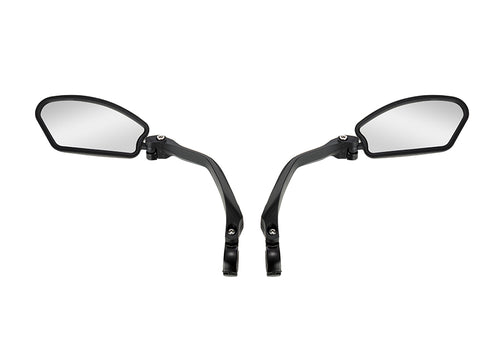
Conventional electric bikes generally are not required to have motorcycle-style rearview mirrors.
Mirrors help riders monitor approaching traffic, particularly on city streets and roads shared with motor vehicles. However, they do not replace checking over your shoulder before changing lanes or making a turn.
Are Turn Signals and Brake Lights Mandatory?
Conventional e-bikes generally do not need motorcycle-style turn signals or brake lights, but riders must still follow local traffic signaling rules.
For example, Texas Transportation Code §551.107 addresses hand signals for turning, slowing, and stopping. Riders may use appropriate hand signals to communicate their intentions.
It is also important to distinguish between a taillight and a brake light. A taillight indicates the bicycle's position, while a brake light signals that the rider is applying the brakes.
Installing a brake light does not automatically satisfy local requirements for a red taillight or rear reflector.

Are Brakes, Bells, and Speedometers Required on E-Bikes?
What Are the Legal Requirements for E-Bike Brakes?
The federal bicycle safety standard, 16 CFR §1512.5. establishes braking performance requirements for applicable bicycles, including stopping-distance tests for hand-operated braking systems under specified conditions.
California Vehicle Code §21201 and Texas Transportation Code §551.104 also require bicycle brakes to be capable of making a braked wheel skid on dry, level, clean pavement.
These laws focus on braking performance rather than mandating hydraulic disc brakes or another specific braking technology.
Do Electric Bikes Need a Bell or Horn?
There is no nationwide federal road-use law requiring all conventional e-bikes to have a bell or horn. Requirements may differ under state or local regulations.
For example, New York Vehicle and Traffic Law §1236 requires bicycles to have a bell or other audible signaling device that can be heard from at least 100 feet (approximately 30 meters). Sirens and whistles are not permitted as substitutes for this requirement.
What Are the Requirements for Speedometers and E-Bike Classification Labels?
Speedometer and classification-label requirements are largely determined by state e-bike classification laws.
- Speedometers: California and Nevada require Class 3 e-bikes to have a speedometer. Nevada specifically requires the display to show speed in miles per hour.
- Classification labels: California and Nevada require a permanently affixed label in a prominent location identifying the e-bike's class, maximum assisted speed, and motor wattage. The label must use an Arial type of at least 9-point size.
Before purchasing an e-bike, make sure the classification label matches its actual specifications.
If modifications change the bike's motor power, assisted speed, or operating mode, verify whether it still qualifies under its original legal classification.
What Should You Check Before Buying a Street Legal E-Bike?
Before buying an electric bike, use the following checklist to review its equipment and road-use eligibility.
Step 1: Check the brakes and lighting equipment.
Confirm that the bike has an effective braking system, and inspect its headlight, taillight, and reflectors. If you plan to commute at night, check your local requirements for light colors and visibility distances.
Step 2: Verify the speedometer and classification label.
Check whether the bike has the appropriate classification information and whether a speedometer is required. Don't assume a bike is legal simply because the product listing describes it as "street legal."
Step 3: Review local road-use regulations.
Confirm that the motor, assisted speed, and throttle operation meet your state's legal definition of an electric bicycle. Also check whether your intended routes allow that type of e-bike.
Recommended Reading: 750W Electric Bike Laws in the US
Step 4: Choose a bike that fits your riding needs.
For city commuting, comfort is important, but motor power, speed limits, braking performance, lighting equipment, and vehicle classification should also be considered to ensure the bike meets local street legal e-bike requirements.
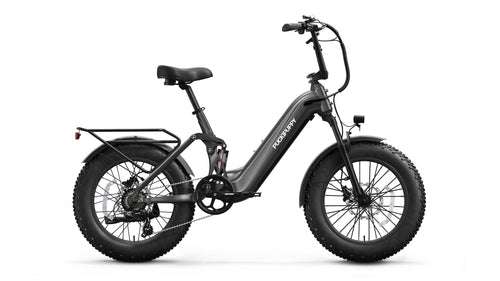
Take the PUCKIPUPPY Beagle 2 ST as an example. This step-through commuter e-bike features a 750W rated motor, with a top throttle-assisted speed of 20 mph and pedal assistance up to 28 mph. The product is listed as a Class 2/3 electric bike.
Its 180 mm hydraulic disc brakes support controlled stopping during everyday road riding, while the bright headlight provides forward illumination. A color LCD display lets riders monitor their speed and other ride information.
For electrical safety, the Beagle 2 ST has received SGS certification to UL 2849 (electrical systems for e-bikes) and UL 2271 (batteries for light electric vehicles) standards. Its step-through frame makes frequent stops and mounting easier, while 26 × 4-inch fat tires and a front suspension system help improve comfort on city streets.
Beagle 2 ST Ebike
However, always check the latest local regulations before purchasing.
If you'd like to compare more options, browse PUCKIPUPPY's collection of street legal e-bikes to find a model with specifications suited to your routes and local requirements.
Being Street Legal Takes More Than the Right Equipment
Determining whether an electric bike is street legal involves more than checking for lights, mirrors, or brakes.
A more reliable approach is to first confirm that the bike meets your local legal definition of an electric bicycle, then review its braking system, lighting, reflectors, classification label, and other applicable equipment requirements. For accessories such as mirrors and turn signals, it's important to distinguish between legally required equipment and optional safety features.
Before buying, compare different e-bike configurations based on your everyday routes and local regulations. The goal is to find a bike that balances legal compliance, practicality, and riding comfort.