














A good electric bike for fishing should match the route to the water, the amount of gear you carry, and the distance you need to ride. Tires, suspension, cargo capacity, battery range, brakes, and frame design often matter just as much as motor power.
A rider using a short paved lakeside path will need a different setup from someone carrying rods, tackle, and a cooler over gravel, dirt, or sand. Choosing the right e-bike for fishing starts with the trip itself.
Start With the Route to Your Fishing Spot
|
Fishing Access |
What Changes on the Ride |
What to Look For |
|
Paved lake or dock path |
Predictable surface, frequent stops |
Easy handling, practical cargo setup, comfortable frame |
|
Gravel access road |
Loose surface and repeated vibration |
Wider tires, stable handling, suspension |
|
Dirt or grass trail |
Less consistent traction, especially when wet |
Good tire grip, controlled low-speed handling |
|
Firm sand or soft shoreline access |
Higher rolling resistance and easier wheel sink |
Wide tires, suitable tire pressure, extra battery reserve |
|
Hilly access road |
More demand climbing and more weight to control downhill |
Strong low-speed assist, reliable brakes, battery reserve |
|
Long or multi-spot trip |
More miles than a simple out-and-back ride |
Battery capacity planned for the full route plus reserve |
The right electric bike for fishing should be matched to the most demanding part of the route to the water, not just the distance. Surface conditions, elevation, trip length, and legal access determine which tires, suspension, battery reserve, and braking setup make sense.
Plan the entire fishing trip, not just the ride from the parking area to the first spot. Include detours, moving between fishing locations, elevation changes, and the return ride when the bike may be carrying more gear.
Access matters too. A fishing area may be open to the public while the trail or road leading to it has separate e-bike rules. Check the land manager’s rules for the specific route before riding.

Match Tires and Suspension to the Terrain
For fishing access, tire width and suspension should match the surface you ride most often. Wider tires improve grip and stability on loose or uneven ground, while suspension helps the bike stay more controlled when the route includes repeated bumps, ruts, or washboard gravel.
Wider Tires Help on Loose and Uneven Surfaces
A fat tire e-bike for fishing is most useful when the route includes gravel, dirt, grass, or firm sand. The wider contact patch can improve traction and reduce how easily the tires sink into softer ground.
Surface conditions still matter:
- Gravel: Wider tires add stability when loose stones shift under the bike.
- Dirt and grass: Extra tire volume helps maintain grip when the surface becomes uneven or damp.
- Firm sand: Fat tires can improve flotation, but tire pressure and sand depth still affect how difficult the bike is to ride.
- Pavement: Fat tires still work, but they add more rolling resistance than narrower tires.
Deep sand and heavy mud can remain difficult even with fat tires, especially when the bike is carrying fishing gear.
Suspension Matters More as the Route Gets Rougher
Suspension becomes more useful when access roads have potholes, washboard sections, exposed roots, or repeated bumps. A front suspension fork can reduce impacts at the handlebars, while full suspension can provide more control and comfort on consistently rough terrain.
For mostly paved fishing routes, suspension may be less important. For mixed gravel and rough access roads, it becomes a more meaningful part of the setup.
Plan How You Will Carry Fishing Gear
A fishing e-bike should have enough carrying capacity for both the rider and the gear, but where the weight is placed matters just as much as the total load. Rods, tackle, coolers, and other equipment should stay secure without interfering with steering, pedaling, or braking.
|
Fishing Gear |
Better Placement |
Why |
|
Fishing rods |
Rod holder or secure side mount |
Keeps rods away from wheels, pedals, and the rider |
|
Tackle box |
Rear rack, basket, or pannier |
Keeps smaller, heavier items stable |
|
Cooler |
Low and centered on a rated rack or cargo platform |
Reduces shifting and helps maintain balance |
|
Chair / clothing |
Rack or securely strapped soft bag |
Suitable for lighter, bulkier items |
|
Phone / electronics |
Waterproof bag or pannier |
Protects gear from rain, splashes, and wet conditions |
Check Payload and Rack Capacity Separately
The bike’s maximum payload and the rear rack’s load rating are separate limits. A high total payload does not mean the entire remaining weight can be placed on the rack. Check both ratings before loading an e-bike for fishing.
Keep Heavy Gear Low and Secure
Coolers and tackle boxes can noticeably affect handling if they sit too high or shift from side to side. Keep heavier gear low, distribute the load evenly, and use secure straps or compatible cargo accessories.
If the bike will regularly carry gear on the rear, a step-through frame can also make mounting and dismounting easier without having to swing a leg over the cargo.

Plan the Loaded Return Trip, Not the Advertised Range
For fishing trips, plan battery use around the full loaded route, not the maximum advertised range. Include the ride to the water, any movement between fishing spots, and the return trip with all gear still on the bike.
Battery capacity is a useful comparison point:
Voltage × amp-hours = watt-hours
For example, a 48V 20Ah battery provides 960Wh of capacity.
Before a longer trip, test the bike with the rods, tackle, cooler, and other gear you normally carry. A short test ride over similar terrain gives a more realistic idea of battery use than an unloaded range figure.
Also check how the bike performs during loaded starts, climbs, and descents. These conditions place the greatest demand on the motor, battery, and brakes.
The key question is not how far the e-bike can travel under ideal conditions, but whether it can complete your actual fishing route with enough battery left for the return trip.
Which Puckipuppy E-Bike Fits a Fishing Trip?
For fishing, the main difference between models is not simply motor power. Frame style, loaded handling, terrain capability, and how often you need to get on and off the bike matter more.
Labrador Pro ST: Better for Gear-Heavy Trips and Frequent Stops
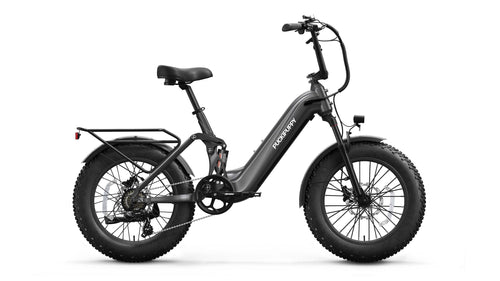
The Labrador Pro ST is the stronger fit when fishing trips involve rear cargo, rough access roads, or frequent stops. Its step-through frame makes mounting easier when a cooler or tackle is already loaded behind the rider.
It also combines a 400 lb maximum load, 26" × 4" fat tires, full suspension, and a 48V 20Ah battery. Torque and cadence sensors provide more responsive assistance when starting with a load or climbing uneven terrain.
Labrador Pro ST
Boxer: Better for Mixed-Terrain Access
The Boxer uses a traditional step-over frame but keeps the features most relevant to fishing access: 26" × 4" fat tires, full suspension, hydraulic disc brakes, a 400 lb maximum load, and a 48V 20Ah battery.
It makes more sense for riders who do not need a step-through frame but still regularly reach fishing spots by gravel roads, dirt paths, or uneven access routes.
For most gear-heavy fishing trips, Labrador Pro ST has the more practical setup. Boxer is the simpler alternative when easy mounting is less important.
Both models weigh more than 85 lbs, so riders who need to lift the bike into a vehicle or carry it around shoreline obstacles should plan transportation before choosing either model.
Boxer
Quick Fishing E-Bike Checklist Before You Ride
Before heading to the water, check the bike under the same conditions you expect to ride:
- Confirm the route allows e-bikes.
- Charge the battery and leave enough reserve for the return trip.
- Adjust tire pressure for pavement, gravel, dirt, or sand.
- Check brake response before loading the bike.
- Keep rods clear of the wheels, pedals, and brakes.
- Secure the cooler, tackle, and other cargo so nothing can shift.
- Keep phones and electronics in a water-resistant bag or case.
A short pre-ride check is especially important when the bike is carrying more weight than usual or the route includes loose or uneven terrain.
Choose for the Trip, Not the Spec Sheet
The best electric bike for fishing is the one that fits the route, carries your gear securely, and has enough battery and control for the full round trip.
For paved access, prioritize easy handling and cargo setup. For gravel, dirt, sand, or longer trips, place more weight on tire traction, suspension, braking, battery capacity, and loaded stability.
Compare Puckipuppy Fishing E-Bikes by terrain, frame style, range, and carrying capacity to find the setup that matches the way you fish.