

















Fall is the season when a slow ride feels like the whole point. The air is cooler, the light turns gold in the late afternoon, and the trails are quieter than they were in July. You don't need a mountain pass or a big itinerary. You need a route that suits you, a charged battery, and one extra layer.
This fall biking guide gives you three real e-bike rides to plan this season, then walks through what to wear, how to plan your battery in cooler weather, and how to bring your dog along.
Why Fall Suits an E-Bike
Cooler weather makes longer rides more comfortable, and fall paths tend to be less crowded than summer ones. An e-bike adds two things that matter this time of year:
- Help on hills and headwinds. Pedal assist takes the edge off climbs and gusty afternoons, so you can keep a relaxed pace instead of fighting the ride.
- A little extra on demand. On bikes with a throttle, a light touch helps you get going again after a stop. Just check the trail rules first (more on that below).
Three Fall Rides Worth Planning
Fall color doesn't arrive everywhere at once. Northern and higher-elevation areas change first, and by late October many of them are past their best. The three rides below are in regions where color typically runs from mid-October into November, so they're a good fit if you're planning a ride in the next few weeks. Timing shifts from year to year, so check local conditions before you go.
1. Katy Trail, Missouri: a rail-trail along the river bluffs
Best for: an easy, flat ride, or a multi-day trip with stops in small towns.
The ride: The Katy Trail is a crushed-limestone rail-trail that runs about 240 miles across Missouri. For fall color, the stretch from Boonville to Machens follows the Missouri River and its bluffs, and the section from Rocheport to McBain is known for its dramatic bluffs. Missouri color usually peaks around mid-October but shifts with the weather, so check the Missouri Department of Conservation's weekly fall color report before you go. Boonville and Rocheport make easy places to stop for lunch.
Good to know: Missouri State Parks allows electrically assisted bicycles up to 20 mph on the trail. The trail is open sunrise to sunset, and some trailhead water and restrooms close for the winter, so check before a late-season trip.
Katy Trail State Park: general information
2. C&O Canal Towpath, Maryland: a quiet path beside the Potomac
Best for: a flat, shaded ride with a historic feel.
The ride: The towpath follows the Potomac River from Washington, D.C. to Cumberland, Maryland. Color tends to come later here than in the mountains to the west. This year, Maryland's Department of Natural Resources expected Washington County, around Williamsport, to peak in the last week of October. Harpers Ferry, just across the river, is a popular fall stop, but the footbridge between the towpath and town was closed for much of fall 2026. so check its current status before you plan around it.
Good to know: The surface is mostly hard-packed dirt and can be very muddy after heavy rain. The National Park Service sets a 15 mph limit on the towpath and does not allow using the motor without pedaling, so this is a ride for pedal assist rather than throttle. There are no charging points along the towpath, so start fully charged. If you're riding with a dog, note that the free shuttle used when the Harpers Ferry footbridge is closed doesn't take pets.
C&O Canal NHP: bicycling and e-bike rules
3. Natchez Trace Parkway, Tennessee, Alabama and Mississippi: a scenic road for a later fall
Best for: relaxed, rolling riding where color arrives late.
The ride: This is a scenic road, not a trail, and in the South the leaves change later. According to Natchez Trace Travel, a guide to the Parkway, color is typically at or near peak from roughly October 24 to November 9 in Tennessee, October 27 to November 11 in northwest Alabama and northeast Mississippi, and November 3 to 20 in central Mississippi. An easy way to ride it is to pick a short section near a town and ride out and back.
Good to know: E-bikes are allowed wherever regular bicycles are allowed on the Parkway. You share the road with cars, and the lanes are 11 feet wide, so ride single file and wear something bright. There are no charging stations on the Parkway, and heavy traffic near Jackson, Mississippi at commute times is worth avoiding. Two sections are closed for construction: mileposts 437 to 440 near Franklin, Tennessee, expected until around May 2027. and mileposts 135 to 159.5 in central Mississippi. In Tennessee, the Park Service suggests that day riders park off Highway 96 and ride south of milepost 437. Check the Parkway's road and site status page before you go.
Natchez Trace Parkway: bicycle guidelines · Typical fall color timing

Not near any of these? Match the ride type to what's close to you
Almost every region has a version of each of these:
- Rail-trails and paved paths: flat, wide and car-free, with plenty of places to stop. Search your state or county parks site for rail-trails nearby.
- Lakeshore and river roads: open views and steady riding. Look for a wide shoulder or a separate path, and bring a windproof layer, since it's often breezier near water.
- Rolling country roads: farm roads and small-town loops are where pedal assist earns its keep. Plan a loop so you're not climbing the same hill twice.
Check the E-Bike Rules Before You Go
E-bike rules vary a lot from one trail to the next. Some trails allow only certain classes of e-bike, some don't allow using the throttle on its own, and some set a lower speed limit than your bike can reach. Before you head out, look up the managing agency's e-bike page (state parks, county parks or the National Park Service) and follow what's posted at the trailhead.
Battery and Range in Cooler Weather
Cold air generally means a little less range from any lithium battery, so it's worth planning with some margin. A few habits help:
- Start with a full charge. Charge before you leave and use the charger that came with your bike. For charging at home, see our guide to charging an e-bike battery safely.
- Keep the battery indoors until you ride. A battery that starts at room temperature, rather than one that's been in a cold garage or car, is a simple way to protect your range.
- Plan with a cushion. Treat the stated maximum range as the best case. Wind, hills, rider and cargo weight, and assist level all change the real number. Our Beagle 2 ST and Samoyed, for example, are rated for up to 60 miles on a 48V 15Ah battery, so a relaxed fall ride should leave plenty in reserve.
- Use a lower assist level on the flats. Save the higher levels for hills.
- Remember there may be nowhere to charge on the way. Neither the C&O Canal towpath nor the Natchez Trace Parkway has charging stations.
- Carry a spare for longer days. Batteries are model-specific, so choose the one listed for your bike in our accessories collection.
For deeper care tips, see our e-bike battery maintenance guide and winter maintenance guide.
Dress for the Whole Ride
A fall morning can feel very different from the afternoon, so layers beat a single heavy coat.
- Base layer plus a light jacket. You can unzip on a climb and zip up on the way down.
- Gloves. Hands get cold first on a bike, even when the rest of you is fine.
- Lights and something bright. Days are shorter, and front and rear lights make you easier to see in late-afternoon shade. Use them even in daylight.
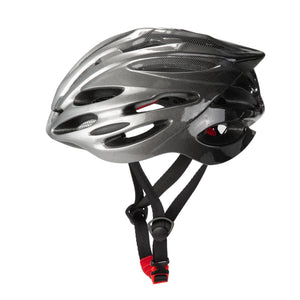
- Go easy on wet leaves. Leaves on pavement and trails can be slippery, especially when damp or in shaded corners. Brake earlier, take turns wider and slower, and avoid braking hard on a pile of leaves. If the weather turns, our guide to riding an e-bike in the rain covers what's safe.
Riding With Your Dog in Fall
Cooler weather is easier on dogs too, but a ride is still different from a walk.
- Keep the pace gentle and take more stops than you think you need.
- Bring water for both of you, even on a cool day.
- Make sure your dog is visible, with a reflective collar or harness, especially in low light.
- Check the rules for dogs on the trail you've chosen, and keep your dog leashed where required.
- Know your dog. For older dogs, or for rides longer than your dog is used to, check with your vet first and build up slowly.
Turn It Into a Weekend Ride
A short trip can be as simple as two easy rides in a new place.
- Day one: an easy loop near where you're staying. It's a good way to see how the bike feels in cooler air and how much battery the ride really uses.
- Day two: a longer route, with a stop for lunch.
- Charging: when you book a room, ask whether you can charge your battery indoors, and start each day with a full charge.
If you're thinking about camping instead, see our guide to planning an e-bike camping trip.
A Note From the PUCKIPUPPY Team
You don't need a perfect route or perfect weather. A fall ride is just a good reason to be outside, at your own pace, with someone you like.
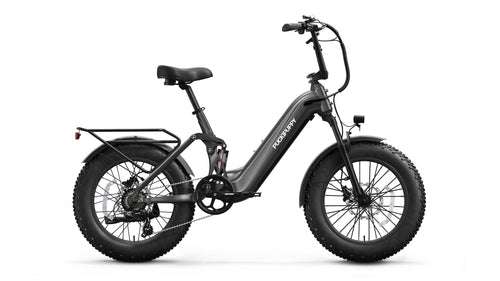
If you're looking for a bike for rides like these, two good places to start are the Beagle 2 ST and the Samoyed, both step-through fat-tire bikes with removable 48V 15Ah batteries. You can also browse the Doberman, the Beagle 2, or all our e-bikes.
Beagle 2 ST Ebike
Samoyed Ebike